

Smooth Hammerhead Shark: The Ocean’s Wide-Headed Hunter
The smooth hammerhead shark (Sphyrna zygaena) is considered one of the most interesting-looking sharks in the ocean. Due to its broad, flat-shaped head, this shark belongs to the Sphyrnidae family. It is known for its high intelligence, active hunting ability, and long-distance migrations. Although its close relative, the great hammerhead, often receives more attention from scientists and the media, the smooth hammerhead is the largest of the schooling hammerheads and plays an important role in maintaining healthy marine ecosystems. Unlike many solitary shark species, smooth hammerheads form huge groups, creating one of nature’s most spectacular marine gatherings. Their distinctive hammer-shaped head is not just for show; it offers several advantages that enhance their ability to locate and capture prey.
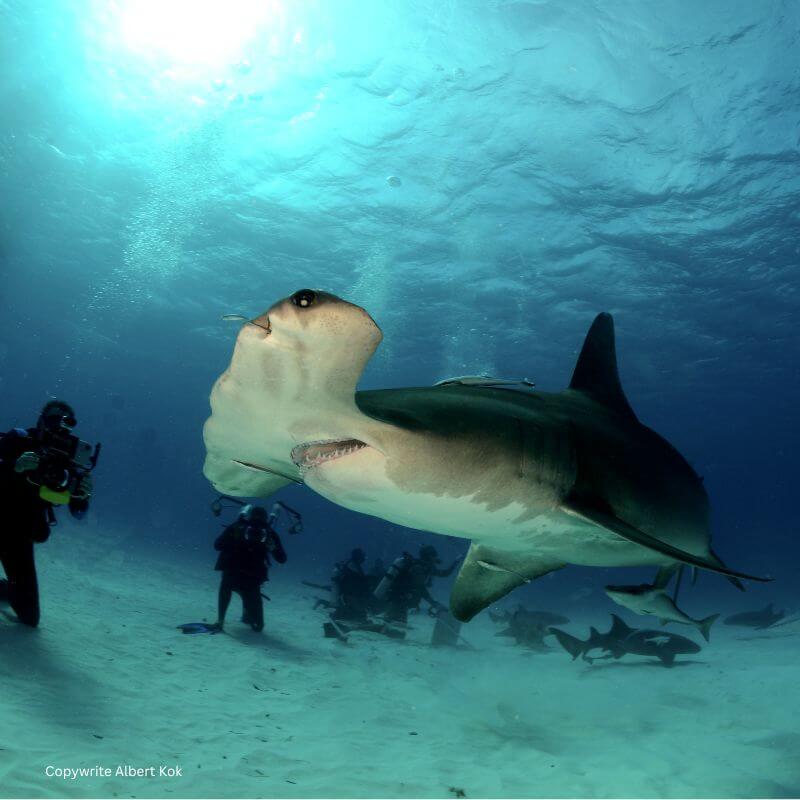
What is a Smooth Hammerhead Shark?
A smooth hammerhead (Sphyrna zygaena) is a member of the Sphyrnidae (hammerhead) family. It is closely related to both the:
- Scalloped hammerhead (Sphyrna lewini)
- Great hammerhead (Sphyrna mokarran)
It can be distinguished by its smooth, rounded hammer-shaped head, which lacks the central notch found in other hammerhead species.
Why does this shark have that unusual head shape?
The cephalofoil (hammer-shaped head) provides several important advantages.
Wider field of view
Because the eyes are positioned at opposite ends of the hammer, smooth hammerhead sharks benefit from:
- Easier detection of prey
- Earlier detection of predators
- Improved navigation through the water
Enhanced sensitivity to electric signals
Like all sharks, smooth hammerheads possess specialised sensory organs called the Ampullae of Lorenzini.
These allow them to detect:
- Tiny electrical signals produced by living animals
- Prey hidden beneath sand or sediment
Their wider head contains more electroreceptors, making them especially effective hunters.
Improved maneuverability
The cephalofoil also functions much like the wings of an aeroplane, allowing the shark to:
- Turn quickly
- Improve stability
- Chase fast-moving prey more efficiently
Where do they live?
Smooth hammerhead sharks have one of the widest geographic distributions of any hammerhead species.
Geographic range
They occur throughout the:
- Atlantic Ocean
- Pacific Ocean
- Indian Ocean
- Mediterranean Sea
Preferred habitats
They commonly inhabit:
- Near Coastal waters
- Continental shelves
- Open offshore waters
- Temperate seas
- Warm subtropical oceans
Unlike many tropical hammerhead species, smooth hammerheads tolerate cooler water temperatures and may venture into temperate regions.
Juvenile smooth hammerheads are commonly found in:
- Shallow Coastal nurseries
- Protected bays
- Areas offering shelter from larger predators
Depth ranges for smooth hammerhead sharks
Although they are frequently observed near the surface, they can dive much deeper.
Typical depth ranges include:
- Surface waters
- Approximately 200 meters
- Occasionally, deeper in offshore environments
During seasonal migrations, they may move through a wide range of ocean depths while following prey.
Dietary preferences
Smooth hammerhead sharks are opportunistic predators that feed on a wide variety of marine animals.
Their diet includes:
- Schooling fish
- Sardines
- Mackerel
- Herring
- Squid
- Octopus
- Rays
- Small sharks
- Crustaceans
Juveniles primarily consume:
- Small fish
- Marine invertebrates
Their highly sensitive electroreceptors enable them to detect prey buried beneath sediment.
Hunting methods employed by Smooth Hammerhead Sharks
Smooth hammerhead sharks use several successful hunting strategies.
Active pursuit
They can:
- Chase schooling fish over long distances
- Swim at high speeds in open water
Electroreception
They use their Ampullae of Lorenzini to:
- Locate rays hidden beneath the seabed
- Detect concealed prey
Pinning prey
After locating a ray, they may:
- Press their broad hammer-shaped head against the ocean floor
- Immobilise the prey before feeding
Schooling behavior
Although cooperative hunting has not been confirmed, schooling may provide:
- Reduced predation risk
- Improved navigation during migration
Size characteristics
The smooth hammerhead is one of the largest hammerhead species.
Typical measurements include:
- Average length: 2.5–3.5 meters
- Maximum length: Approximately 5 meters
- Weight: Approximately 400 kilograms
Females generally grow larger than males.
Visual identification characteristics of a Smooth Hammerhead Shark
The smooth hammerhead shark can be identified by several distinctive features.
These include:
- Flat hammer-shaped head without a central notch
- Tall, curved dorsal fin
- Long, slender body
- Greyish to olive-brown colouration above
- White underside
- Broad and notably not falcate pectoral fins
These physical adaptations contribute to efficient long-distance swimming.
Danger posed to humans
Very rarely.
As a general rule:
- Smooth hammerhead sharks avoid people
- They primarily feed on marine animals
- They are naturally shy
- Encounters with swimmers are uncommon
- Documented attacks are extremely rare
Like all large wild animals, they should be treated with respect, never approached, and never provoked.
How large will a Frilled Shark get?
-
- Average length: 43–52 inches
- Maturation length: Approximately 79 inches (for young males)
- Average pup weight: Up to 18 pounds
Do Smooth Hammerhead Sharks frequently school together?
Yes.
One of their most fascinating behaviours is their tendency to form large schools.
Schools may contain:
- Dozens of sharks
- Hundreds of sharks
- Occasionally, even larger groups
Researchers believe schooling provides several benefits, including:
- Predator protection
- Improved navigation
- Greater breeding opportunities
- Reduced energy expenditure during migration
Younger smooth hammerhead sharks tend to school more frequently than adults.
Reproduction and Life Cycle
Smooth hammerheads are among the shark species that are viviparous, meaning they give birth to live young rather than lay eggs. Their reproductive process involves internal fertilisation.
Reproduction
Key reproductive facts include:
- Internal fertilization
- Pregnancy lasts approximately 10–11 months
- Litters typically contain 20–50 pups
- Pups are born fully developed
Immediately after birth, newborn smooth hammerhead sharks are completely independent and begin hunting on their own. There is no parental care following birth.
How Fast Can Smooth Hammerhead Sharks Swim?
Smooth hammerhead sharks are capable of reaching very high speeds due to their streamlined body shape and efficient swimming ability.
These adaptations allow them to:
- Travel long distances during migration
- Chase fast-moving schooling fish
- Navigate powerful ocean currents
- Maintain stability while making sharp turns using their distinctive hammer-shaped head.
Smooth Hammerhead Shark Migration
Smooth Hammerhead Sharks migrate across vast distances to follow seasonal food sources and breeding locations.
Their migration patterns are influenced by:
- Seasonal ocean currents and other water conditions
- Availability of food throughout the year
- Seasonal mating behavior
Researchers estimate that some smooth hammerhead sharks travel between 100 km and more than 6,600 km each year during migration. Because many of these migration routes cross international borders, it is essential for governments to work together to protect this species through international conservation efforts.
Natural Predators
Although adult smooth hammerhead sharks have few natural predators because of their large size, both adults and juveniles may occasionally be preyed upon by:
- Killer whales
- Larger shark species
- Great White Sharks (rarely)
Threats Facing the Smooth Hammerhead Shark
Smooth hammerhead sharks have thrived for millennia, but they now face a growing number of human-related threats.
Overfishing
Smooth Hammerheads are commonly caught both intentionally and as bycatch in:
- Longline fisheries
- Gill nets
- Bottom trawls
- The shark fin trade
Their valuable fins make them one of the most sought-after species in the international shark fin trade.
Low fecundity
Female smooth hammerhead sharks:
- Take many years to reach maturity
- Reproduce relatively infrequently
As a result, declining populations may require many generations to recover.
Habitat degradation
The coastal nursery areas where young hammerhead sharks develop continue to be affected by:
- Pollution
- Coastal development
- Plastic pollution
- Climate change
Learn More About Sharks and Marine Conservation
The smooth hammerhead shark is a compelling example of how evolutionary pressures can produce highly specialized predators that are perfectly adapted to their environment. Its unique, broad hammer-shaped head, long-distance migrations (up to 4,100 miles), and schooling behaviour make it one of the ocean’s most remarkable shark species and an important contributor to healthy marine ecosystems.
Despite its ecological importance, the smooth hammerhead shark faces serious global threats, including:
- Overfishing
- Habitat destruction
Understanding species such as the smooth hammerhead shark highlights why shark conservation is so important and why protecting the world’s oceans is essential for future generations.
Continued efforts in:
- Scientific research
- Sustainable fisheries management
- Public education and awareness
Will play a vital role in protecting these incredible sharks for generations to come.