

Lemon Shark: One of the Ocean’s Friendliest Predators
Because of its unique pale-yellow-brown colouration and non-aggressive disposition, the Lemon Shark is one of the most recognisable shark species globally. In contrast to some other shark species often depicted as aggressive or bloodthirsty in movies, lemon sharks tend to be more curious than aggressive. As such, they are among the most researched of all shark species. These powerful predators can be found in temperate waters from around the entire Atlantic Ocean through to certain sections of the eastern Pacific. They are also vital components of marine ecosystems. Due to their ability to learn and adapt, their propensity to act socially, and their preference for relatively shallow water environments, lemon sharks continue to provide a wealth of information for those who study shark behaviour and cognition.
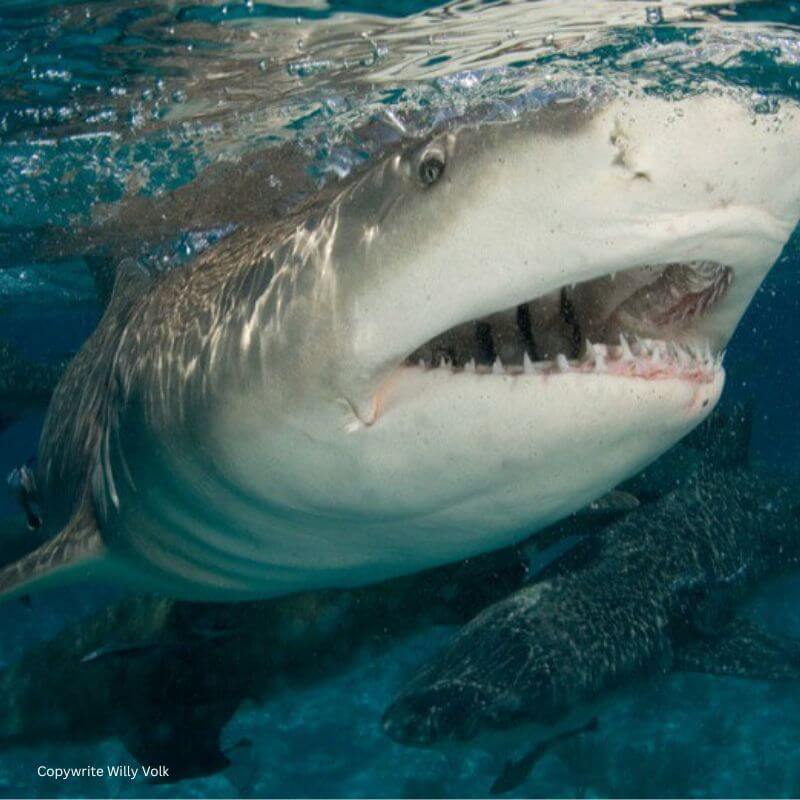
What Is a Lemon Shark?
The lemon shark (Negaprion brevirostris), part of the Carcharhinidae family (also referred to as requiem sharks) and found throughout tropical and subtropical coastal waters across the globe, is characterised by its light yellowish-green colouration, which serves as perfect camouflage in sandy-bottomed coastal environments. The scientific community classifies the lemon shark as vulnerable due to overfishing for meat, fins, leather, and liver oil, along with threats from pollution, habitat degradation and climate change.
To what extent do Lemon Sharks exhibit social behaviour?
Lemon sharks display a degree of social behaviour that is uncommon in some of the world’s largest predatory fish. Scientists have documented this species swimming in loose associations with one another, returning to specific sites repeatedly, forming relationships with preferred companions, and sometimes displaying complex behaviours such as recognising individual members within a group. Young lemon sharks often form small schools that persist for multiple years, then disperse to larger areas as they reach maturity. These types of social behaviours make lemon sharks particularly interesting subjects for continued research in marine science.
Are Lemon Sharks Dangerous to Humans?
Although lemon sharks can grow quite large and look intimidating, they are considered to be one of the least aggressive large shark species. They are known to be curious, calm, non-aggressive towards people and very cautious. Most encounters involving lemon sharks occur when the shark approaches divers out of curiosity before quickly departing. While there have been occasional reports of bites from lemon sharks, attacks are virtually unheard of and rarely, if ever, connected to an actual threat to a person. As with all wild animals, responsible observation from a safe distance is key when viewing lemon sharks in their natural environment.
Intelligence
Researchers have established that lemon sharks are among the most intelligent of shark species. Studies demonstrate that lemon sharks learn from past experiences, remember how to perform tasks, recognise previously encountered areas, associate with one another, and engage in problem-solving. In fact, researchers have demonstrated that lemon sharks will observe and learn from one another, a level of cognitive ability that is somewhat surprising given their classification as fish. This intelligence has greatly contributed to their value as a model organism for studying shark cognition and learning.
How do Lemon Sharks live?
Unlike many shark species that are solitary creatures, lemon sharks tend to congregate in groups. Although these groups are not typically structured like those seen in schooling fish and do not consist of hundreds of individuals, scientists have identified evidence that indicates lemon sharks:
- Travel together in loosely associated groups
- Return to the same general locations to rest
- Associate with preferred companion(s)
- Group in nursery areas as juveniles
In addition to exhibiting social behaviour in these ways, lemon sharks also have distinct physical characteristics that allow them to thrive in shallow Coastal waters. For example, adult lemon sharks are relatively stout, powerful swimmers that cruise through shallower waters rather than relying on high-speed pursuits. Their broad, rounded snouts, two nearly-equal-sized dorsal fins, asymmetrical, elongated tails and small but highly-effective eyes serve as examples of adaptations that support successful feeding habits in shallow coastal waters. The average adult lemon shark measures between 7.9 and 11 feet in length (2.4 – 3 meters). However, exceptional individuals have been recorded to measure up to 11.5 feet (3.4 meters) in length.
Lifespan
Lemon sharks are long-lived compared to other shark species. Researchers believe that an average lemon shark can live well beyond 20 years of age, and some estimate lifespans of up to 30 years.
Habitat
Lemon sharks are found in tropical and subtropical coastal waters across the Americas and West Africa. Research suggests they prefer warmer, shallow Coastal waters.
They are most likely found in:
- Estuaries
- Bays
- Beaches
- Mangrove areas
Adult lemon sharks primarily inhabit:
- Shallow Coastal waters
- Coral reefs
- Estuaries
- Seagrass beds
Younger lemon sharks are more commonly found in:
- Mangrove forests
- Lagoons
Diet
Lemon sharks are opportunistic carnivores that eat a diverse array of marine animals, including:
- Fish (including bony fish and rays)
- Squid
- Octopus
- Crustaceans
- Sea birds
Younger lemon sharks tend to eat smaller prey items, whereas older adults typically feed on larger prey. Unlike many other shark species, lemon sharks do not rely solely on speed to hunt. Instead, they use stealth and stalking techniques followed by quick strikes at close range.
Lemon Shark mating
Lemon sharks mate during the spring and summer months, when males perform mating rituals using body language and when males perform physical courtship rituals using pheromones, body language, and biting behaviors to initiate mating with females.
After copulation, the female stores sperm internally until she becomes pregnant. Fertilised eggs develop internally, receiving nutrients via a placental-like structure called a yolk sac placenta.
Female lemon sharks:
- Carry developing babies for approximately ten to twelve months
- Give birth to live pups
- Produce four to seventeen pups per litter
Newborn baby lemons (or pups) are:
- Approximately sixty to seventy centimetres long
- Completely independent at birth
How many pups does a female Lemon Shark give birth to?
On average, a female lemon shark gives birth to eight to twelve pups per litter.
Learn More About Sharks and Ocean Conservation
The Lemon Shark shows us how much smarter than a monster sharks really are. Sharks have many unique qualities, including their ability to learn, their social behaviour, and their importance to the ecosystem. These unique traits make the lemon shark one of the coolest fish we can find in our oceans today. Saving the lemon shark is very important because it affects all other marine life that lives alongside it in its habitat. Mangroves, coral reefs, and coastal ecosystems provide habitats for over 20,000 species of marine life. Continued research and responsible conservation efforts for the lemon shark and other sharks like it will allow future generations to enjoy watching these amazing creatures thrive.