

Blacktip Reef Shark: One of the Ocean’s Most Agile Reef Predators
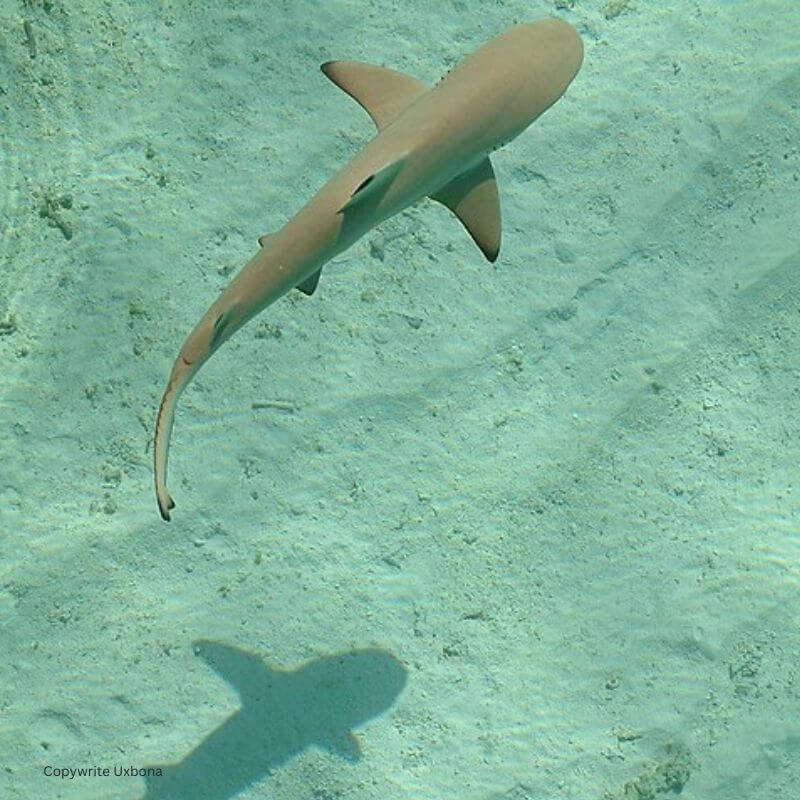
The Blacktip Reef Shark has become one of the world’s best-known and easily identifiable reef sharks. With a slender, elongated body with a unique black tip on each fin and a smooth gliding motion while swimming, this species can be found swimming near the surface of shallow coral reefs from the tropical regions of the Indo-Pacific. In comparison to many of the larger shark species, which tend to swim in deeper waters, the blacktip reef shark spends a lot of time closer to shore than other shark species. Because they tend to stay closer to shore, the blacktip reef shark is also one of the few shark species that scuba divers or snorkelers are likely to see.
What Is a Blacktip Reef Shark?
Blacktip Reef Sharks (Carcharhinus melanopterus) are part of the Requiem Shark Family (Carcharhinidae) with a distinct appearance due to their darkly coloured fin tips. Blacktips have evolved to be perfect predators for living among shallow coral reefs that cover large areas such as lagoons, reef flats and sand channels. They travel across these areas hunting their prey.
Some interesting facts about blacktip reef sharks:
- Scientific Name: Carcharhinus melanopterus
- Family Name: Carcharhinidae
- Average Length: Approximately 1.2 – 1.6 m
- Largest recorded length: About 2m
- Maximum Weight: Approximately up to 45 kg
- Habitat: Coral Reefs in tropical regions
- Diet: Predominantly fish but also includes squid, octopus and crustaceans
- Conservation Status: Near Threatened
Blacktip Reef Shark Habitat Around the World
Blacktip Reef Sharks have some of the most extensive ranges for all Tropical Reef Shark species. They can be found in warm coastal waters throughout the entire Indo-Pacific Region.
Examples of places that they occur include:
- Red Sea
- East Africa
- Madagascar
- Maldives
- Seychelles
- India
- Sri Lanka
- Southeast Asia
- Indonesia
- Papua New Guinea
- Northern Australia
- Philippines
- Japan
- Pacific Island nations such as Fiji, French Polynesia and Hawaii.
These fish typically do not live below 75m; they generally spend their time in shallow water (a couple of meters deep).
Young Blacktip Reef Sharks commonly inhabit shallow nurseries with the protective features of Mangrove forests or Seagrass meadows, which help shield them from larger predators.
How to Identify a Blacktip Reef Shark
Although many shark species have black tips, the blacktip reef shark can be identified by its unique characteristics.
Look for:
- Fin Stamping: Prominent jet-black tips mark nearly every fin, including the pectorals, pelvics, anal, second dorsal, and tail fin.
- The Ultimate ID Mark: The first dorsal fin features a large, stark black apex tip that is highlighted by a brilliant, creamy-white band running immediately below it.
- Silhouette: An athletic, slender, and elongated body form paired with a moderately short, pointed snout.
- Coloration: A classic countershaded coat of yellowish-brown to grey-bronze on top that fades into a bright white belly.
- Movement: A state of perpetual forward motion, actively gliding just inches above shallow coral reefs.
Another great way to identify this shark is the black mark on the base of the first dorsal fin (with a thin white band at the bottom).
What Does the Blacktip Reef Shark Eat?
Opportunistic predators that inhabit blacktip reef sharks seek out food in all levels of coral reef systems.
Blacktip reef shark diets consist of many different types of fish, as well as invertebrates, including:
- Small reef fish
- Surgeonfish
- Parrotfish
- Mullet
- Goatfish
- Squid
- Octopus
- Shrimp
- Crustacean species such as crabs
- Juvenile rays
Unlike relying on their speed, blacktip reef sharks often use a team effort, herding schooling fish around the reef before attacking.
How Does the Blacktip Reef Shark Hunt?
The Blacktip Reef Shark is a crepuscular and nocturnal predator that primarily hunts in the early morning and late afternoon, when most reef fish are actively feeding.
Some hunting techniques used by Blacktip Reef Sharks include:
• Swimming through shallow lagoons to hunt
• Herding prey into small areas
• Changing direction quickly
• Bursting speed from slow speeds
• Hunting alone or in loose aggregations
The constant patrolling of their home ranges, rather than waiting at one location (ambush), allows Blacktip Reef Sharks to continually search for potential food sources. Because they are obligate ram ventilators, they must keep swimming to breathe, making constant active patrolling a biological necessity rather than just a hunting choice.
Are Blacktip Reef Sharks Dangerous to Humans?
One of the most frequently asked questions about blacktip reef sharks is whether they pose a threat. The quick response is “no.”
Blacktip reef sharks tend to be naturally apprehensive around humans and will typically swim off when an individual approaches. The majority of encounters with these sharks occur while snorkelling or scuba diving above coral reefs. Bites from blacktip reef sharks have occurred at times in various parts of the world; however, such instances are incredibly rare and almost always associated with one of the following factors:
- Spear fishing
- Feeding sharks
- Misidentification
- Provoking the shark
Blacktip Reef Shark Behaviour
The behaviour of blacktip reef sharks has long fascinated researchers in marine science.
Some interesting behaviours are:
Site fidelity
Many individuals have remained in their homes with relatively small areas for many years.
Swimming during the daylight hours.
While some species of sharks will rest at the bottom of the ocean, this particular species spends most of its day actively swimming through the water.
Curiosity along with caution.
This species will occasionally investigate an unfamiliar object (and then quickly swim back out).
Excellent navigation.
Studies indicate that they use a variety of cues, such as visual references, magnetic field information, and physical parameters of their environment, to successfully navigate large reef structures.
Blacktip Reef Shark Reproduction and Life Cycle
Blacktip Reef Sharks are viviparous. That means that when blacktip reef sharks produce offspring, it is through internal fertilisation (a different reproductive process from oviparity, or egg-laying).
In terms of their reproductive cycles, this involves:
- A gestation period of roughly 7-11 months
- They give birth to litters of 2 to 5 pups.
- The average newborn size is approximately 30-50 cm in length.
- Young sharks have shallow habitat nurseries.
Generally, female sharks return to sheltered coastal bays and estuaries to give birth because these areas have few predators. While initial juvenile growth is actually quite rapid to maximize survival, their overall sexual development is slow. In fact, juvenile blacktip reef sharks will spend 4 to 9 years maturing before becoming reproducing adults.
Why Are Blacktip Reef Sharks Important to Coral Reefs?
Blacktip reef sharks are considered mid-level predators that help control populations of smaller predatory species and reef fish, helping maintain balanced reef communities.
The presence of blacktip reef sharks promotes healthy reef ecosystems by:
- Helping to prevent prey populations from growing too large.
- Maintaining balance in natural food webs.
- Promoting healthy behaviour among fish.
- Promoting biodiversity.
- Showing signs of a healthy marine habitat.
Because sharks, such as blacktip reef sharks, serve as indicators of overall ecosystem productivity, scientists use them to assess the health of marine reefs.
Threats Facing Blacktip Reef Sharks
Blacktip reef sharks can be found throughout their range, but they face significant pressures to survive wherever they live.
There are a few major causes that threaten them:
Overfishing
Sharks are often caught by accident during commercial fishing operations. They also intentionally catch them so they can sell the shark’s body as food and its fins.
Loss of Coral Reefs
Climate Change (and global warming) has caused coral bleaching; pollution is killing coral reefs, too. All of this makes it harder for the sharks to find places to live.
Development along Coastlines
Humans build on land near coral reefs, which destroys the nurseries for young sharks and increases the amount of sediment entering the water.
Pollution of Marine Environments
Trash (plastic) and chemicals polluting marine environments harm both the sharks and their prey.
All of these factors have contributed to declining populations in various parts of the world.
Blacktip Reef Shark Reproduction and Life Cycle
The Blacktip Reef Shark is a viviparous species, meaning they reproduce through internal fertilization and give birth to live young. This process differs from oviparous species (which lay eggs) and ovoviviparous species (where eggs hatch inside the mother without a placental connection).
There are four stages that occur during most reproduction cycles of blacktip reef sharks:
- A gestation stage or time frame that lasts about 7-11 months
- Each female typically has 2-5 pups per litter.
- Pups at birth range in size from 30 to 50 cm long.
- Nursery sites for newborn juvenile blacktip reef sharks are shallow-water areas.
Most females will return to near shore and/or sheltered bays to deliver their young and allow them to grow in an area with few natural predators.
What Can We Learn from the Blacktip Reef Shark?
The blacktip reef shark is an ideal example of the positive role predators play in maintaining healthy, balanced ecosystems. These sleek and beautiful sharks are far from menacing hunters; they help keep the ecosystem in balance by regulating mid-level fish populations and supporting overall biodiversity. Knowledge of its behaviour, habitat, and ecological value can dispel myths and provide insights that may promote greater awareness and respect for this outstanding animal. In addition, as coral reefs continue to decline due to various environmental factors, it is increasingly important to protect species such as the blacktip reef shark to ensure healthy, thriving oceans in the future. If you have developed a new interest in sharks after reading about the blacktip reef shark, I encourage you to visit us in person, where we offer a wealth of educational information and insight into the shark species we get.