

Pelagic Sharks: Masters of the Open Ocean
Most people tend to visualise a shark swimming near a beach or in an area with lots of coral. Pelagic sharks, however, live for nearly all their life in the ocean and travel great distances away from the coastline. Pelagic sharks are perhaps one of the longest-distance swimmers that inhabit our oceans. Travelling thousands of kilometres through the wide expanses of deep blue water, pelagic sharks follow where the fish are (food), follow the ocean currents and follow the changing seasons. As opposed to reef sharks or bottom-dwelling sharks, which frequently swim along the seafloor or coastal areas, pelagic sharks do so very seldom.

What Are Pelagic Sharks? Understanding Sharks That Live in the Open Ocean
Pelagic is a term referring to the area of the ocean which has no coastline or seafloor beneath it; this can be miles out at sea. Most, if not all, of a pelagic shark‘s time will be spent in the vast expanse of open water found in the middle of the ocean (deep offshore) as opposed to coastal sharks, which patrol beaches and/or rocky shores. While some bottom-dwelling coastal sharks can rest on the seafloor, many pelagic sharks must travel nonstop. In fact, many do not cease swimming because forward motion is required to force water over their gills; if they stop moving, they cannot breathe.
The pelagic shark type has adapted its body shape for living in the open ocean. As such, its body shape will typically resemble a torpedo‘s shape due to its streamlined nature. Its tail is strong, and it has incredible endurance.
A few other traits of pelagic sharks include:
• Torpedo-shaped bodies.
• Ability to swim great distances.
• Large sensory systems used to find prey.
• Very large areas of migration per year.
• Adaptation to extreme depths and open ocean environments.
• Diet consisting of fish, squid, rays, seabirds, etc., based upon the species
Where Do Pelagic Sharks Live?
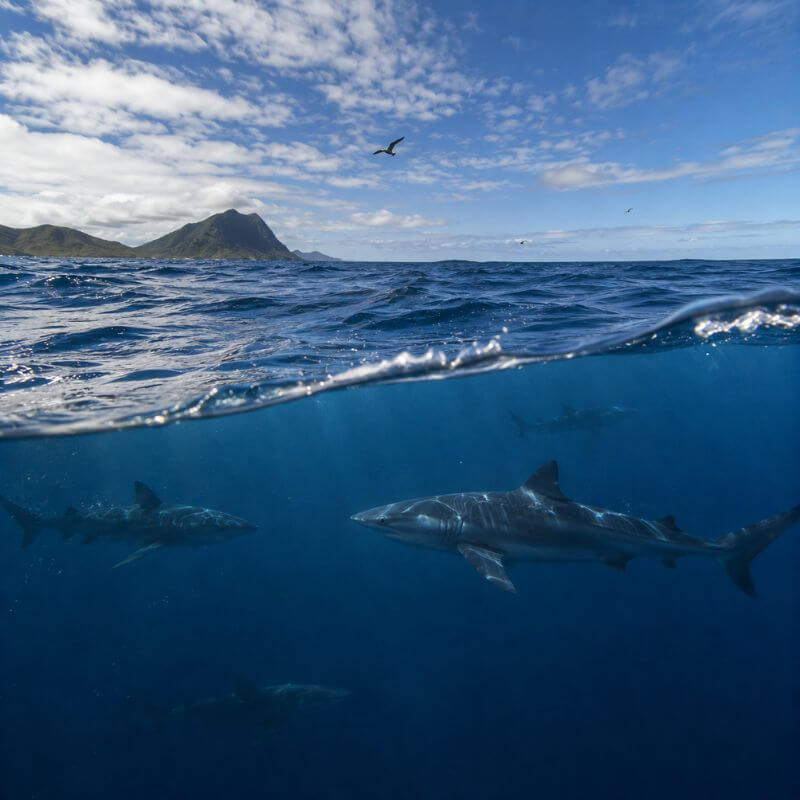
Pelagic sharks can be found in all of the world’s major oceans. Pelagic sharks may exist in a variety of types of environments as well. They have been known to live in areas with warm tropical sea conditions. Some pelagic sharks have also lived in cooler temperate ocean environments, and some have even lived for extended periods of time in cold offshore areas. The area of the world where an individual shark lives is determined by several factors, including how warm or cool the water temperature is, where its food supply is, where it breeds, and where seasonal ocean currents take it.
Several species of pelagic sharks will spend a lot of time at very great distances from land (often many hundreds of kilometres), over extreme depths such as oceanic trench systems and near large underwater volcanoes called seamounts. Some species of pelagic sharks often visit areas around floating debris, which attracts schools of small fish. Many species of pelagic sharks will follow productive ocean currents. Some pelagic shark species also visit shallow coastal areas off larger oceanic islands.
Why Do Pelagic Sharks Keep Swimming?
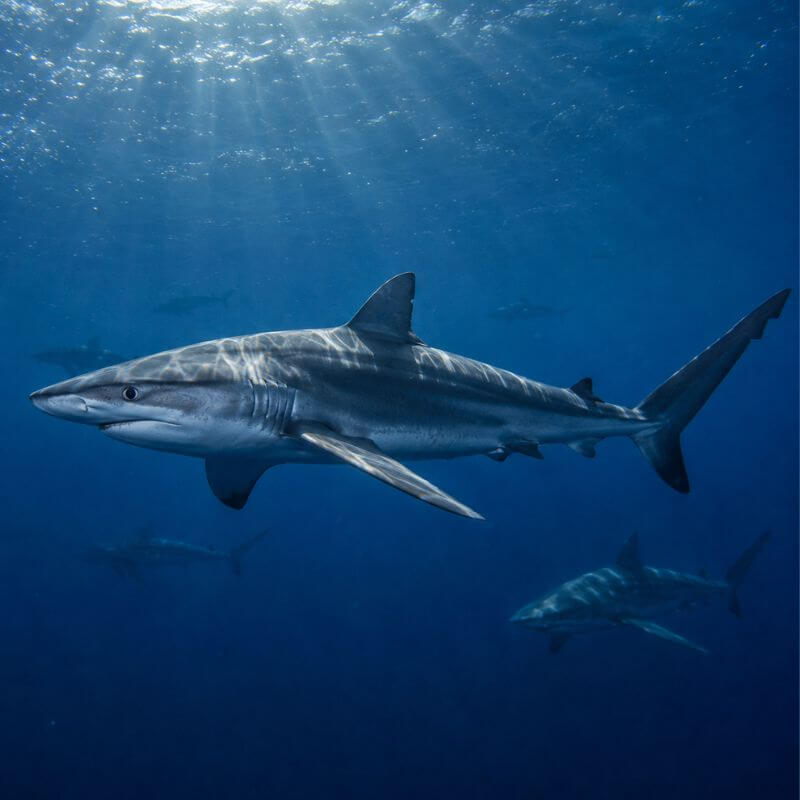
Pelagic sharks are among the most interesting groups of animals because they continually move through the water.
The continuous swimming that many pelagic sharks do serves several purposes, including:
- Locating food
- Moving from location to location in order to locate areas with available food
- Efficiently circulating blood and oxygen across their gill fillaments
- Patrolling large hunting ground areas
- Tracking schools of fish.
While many pelagic sharks are able to continue swimming almost constantly, not all species must be active in order to find food. “Many species can force water over their gills by pumping with their buccal muscles (located in the cheek and jaw region) when at rest or swimming very slowly.
Common Species of Pelagic Sharks
There are many different types of sharks in the open ocean. There are some that have very high profiles as being at the top of their food chain, and there are some that just eat plankton.
Blue Shark.
One of the world’s most widely distributed pelagic (open ocean) sharks is the blue shark. It can be identified by its large pectoral fins and deep blue colouration. Its habitat consists of temperate waters and tropical waters around the globe. The blue shark is an agile swimmer. Blue sharks migrate thousands of miles seasonally. Their diets consist of:
- Squid
- Small fish
- Mackerel
- Sardines
- On occasion, Seabirds
Shortfin Mako Shark
The shortfin mako is regarded by many experts as the fastest shark in existence. These very active predators reach burst speeds of nearly 50 km/h (and up to 31 mph) while chasing after their fast-swimming prey, including tuna and swordfish.. They are able to leap out of the water so high because of the physical abilities of their bodies, which they use to hunt for prey or catch a hook if an angler hooks into them.
Oceanic Whitetip Shark
Oceanic whitetip sharks are well-suited to live in deep, open oceans. Long, rounded fins on this species, with distinctive white-tipped ends, allow it to swim very efficiently through wide-open seas where finding enough food can be difficult at times.
Whale Shark
Although the whale shark is the largest fish, it eats mostly very small organisms.
This large fish has a filter to eat:
- Plankton
- Fish eggs
- Krill
- Tiny Crustaceans
Some of the greatest migrations made by any marine animal are undertaken by the whale shark.
Porbeagle Shark
Porbeagles prefer colder water than most other species of sharks and can be found in the North Atlantic and Southern Hemispheres. Like the Great White Shark, Porbeagles are similar. However, they are smaller and hunt schooling fish.
Salmon Shark
The Salmon Shark is similar to the Porbeagle. The Salmon Shark lives in the cool waters of the North Pacific Ocean. It has a special ability to keep its body temperature above that of the surrounding water, allowing it to be an efficient hunter in near-freezing sub-Arctic waters.
How Do Pelagic Sharks Hunt?
There are challenges of hunting in the open ocean. Unlike a reef environment (in which prey can hide), there is no cover for prey as they swim through the open ocean. Pelagic Sharks have evolved various strategies for finding prey.
These methods include:
- Tracking large schools of fish
- Travelling long distances to catch prey
- Sensing vibrations from other fish using their lateral lines
- Using electroreceptors (the ampullae of Lorenzini) to pinpoint the exact location of prey at extremely close range, even in pitch-black water.
- Hunting at all times of day and night
Additionally, some species will feed on injured animals or take advantage of the feeding opportunity created when whales, dolphins, or fishing boats create a food source.
What Do Pelagic Sharks Eat?
Pelagic shark diets vary based on their species, how big they grow, and where in the water column they spend most of their time.
Some common prey for many species of pelagic sharks include:
• Tuna
• Sardines
• Flying Fish
• Squid
• Mackerel
• Bonito
• Rays
• Smaller Sharks
• Octopus
• Jellyfish (some species eat jellyfish)
For larger predators that feed on other marine mammals, such as seals or dolphins, this occasionally occurs by chance. The whale shark is one of three giant filter-feeding shark species with a diet consisting mainly of tiny zooplankton.
How Far Can These Shark Species Migrate?
While many types of sharks are migratory animals, some pelagic sharks migrate extremely long distances. Satellite tracking has shown that some pelagic sharks travel thousands of kilometres across entire ocean basins.
There are various reasons why pelagic sharks make these extreme migrations, including:
1. Water temperature
2. Reproduction (mating)
3. Prey migration patterns (seasonally)
4. Ocean current
5. Nursery areas
How Do Scientists Track These Sharks?
Researching large oceanic pelagic sharks in remote ocean waters is very difficult.
To study sharks, researchers have developed a number of different new technologies, which include:
1) Satellite Tags
2) Acoustic Transmitters
3) GPS Tracking
4) Pop-Up Archival Tags (PATS)
5) DNA Analysis
6) Photo Identification
Data from all this tracking technology has greatly changed what we know about how long it takes sharks to migrate, what their behaviours are, and where they spend their time.
Why Are Pelagic Sharks Important?
Pelagic sharks play an important role in maintaining health in marine ecosystems. Apex predators such as sharks help regulate the populations of fish and other marine animals by feeding on them.
Having healthy populations of sharks also contributes to:
1) Maintaining balance with respect to food webs
2) Ensuring the health and strength of fish populations by culling the sick, weak, and injured.
3) Support for stable marine ecosystem health
4) Increased diversity
5) Ocean Resilience
Threats Facing This Shark Species
Many of the world’s pelagic shark species are currently facing very serious conservation issues.
The major threats that are affecting them include:
- Commercial fishing
- Fishing bycatch (the catching of non-target fish species)
- Over-harvesting for their fins in a practice known as “shark finning”
- Impact on their survival due to climate change
- Impact on their survival due to plastic pollution
- Pelagic sharks reproduce slowly and thus take a long time to recover lost population levels.
Thus, it is particularly difficult for these species to recover from commercial over-fishing.
Are Pelagic Sharks Dangerous to Humans?
Although they have a bad name, most encounters with humans and pelagic sharks are quite infrequent. Most people do not get to spend much time in the open ocean, which is the natural habitat of these pelagic sharks. Pelagic sharks (like virtually every other type of shark) tend to go out of their way to avoid humans; what attracts them is their normal food source. Both responsible ocean activities and improved scientific knowledge will promote respect for pelagic sharks while reducing unnecessary fears that have developed.
Although both belong to the same fish group, important differences exist.
| Pelagic Sharks | Coastal Sharks |
|---|---|
| Live far offshore | Live near beaches and reefs |
| Swim long distances | Smaller home ranges |
| Follow ocean currents | Depend on coastal habitats |
| Hunt open-water prey | Hunt reef or coastal prey |
| Often highly migratory | Less migratory overall |
Both groups play equally important roles within marine ecosystems.
Discover More About Sharks and Ocean Conservation
Sharks that inhabit the open ocean show us what is possible in such an extraordinary place. The massive migrations they undertake, their specialised hunting tactics, and the critical role they play within their ecosystem all contribute to making them among the most interesting creatures on our planet. When learning about and appreciating these amazing predators, we help ensure that there will continue to be healthy oceans for generations to come. If you would like to learn more about sharks, which live naturally in the ocean, you may find information on the educational blog page, blogs related to shark conservation, and responsible marine experience options with us.