

Blackmouth Catshark:Mysterious Deep-Sea Shark
The Blackmouth Catshark is one of the lesser-known shark species that inhabit our oceans; however, they are vital to how the ecosystem functions at great depths. They do not have the same visual appeal as some of the larger predatory sharks we see on documentary programs, and they live at such extreme depths that their lives go unseen for long periods. While many people are unaware of them, many scientists study these animals to better understand deep-sea diversity and the overall health of marine ecosystems. Therefore, whether you are a Marine Biology student, interested in oceans or simply a fan of sharks, learning about the Blackmouth Catshark will give you a look inside a completely unexplored environment with very extreme conditions such as extreme pressure, complete darkness and specialised creatures that thrive under those harsh conditions.

What Is A Blackmouth Catshark?
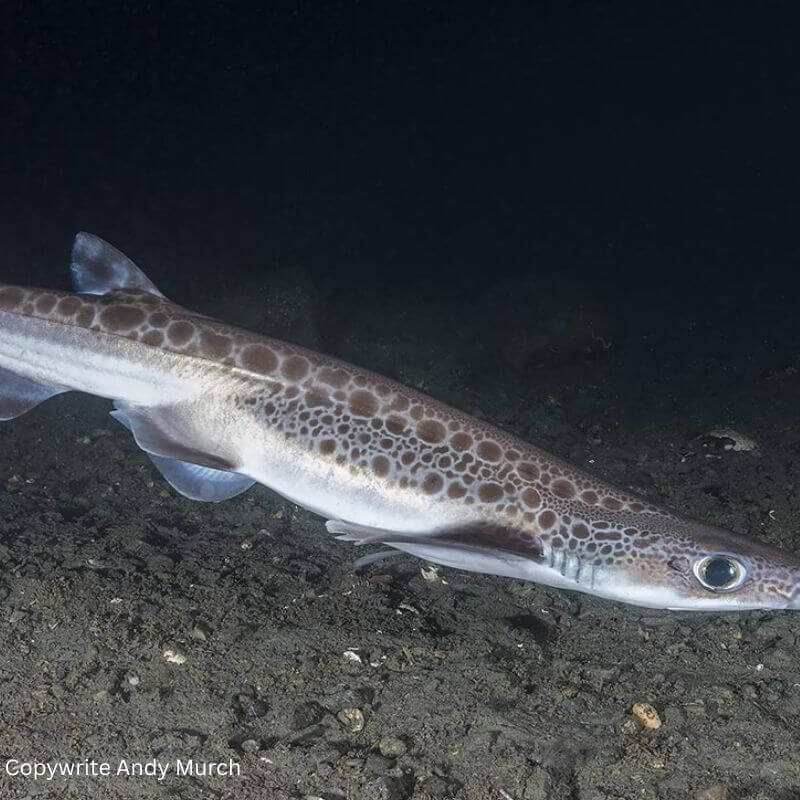
The Blackmouth Catshark is a small catshark (family Scyliorhinidae), but it has a unique feature: the dark colouration of the inside of its mouth, making this feature one of the most distinctive characteristics of the Blackmouth Catshark. Catsharks are slow-moving fish, and they typically live on the floor of the ocean rather than in the open ocean, where there are many other fast-swimming types of shark. Unlike those faster swimming types of sharks, these catsharks search the sea floor for food.
Some notable features of the Blackmouth Catshark include:
- A dark grey to brown body with variously distributed patterns
- Black-colored mouth
- Elongate slender body
- Large eyes are well-suited for seeing in poor light
- Two very small dorsal fins are located at the rear of the body
- Skin covered with numerous minute dermal denticles
Even though it may appear small compared to some larger shark species, the Blackmouth Catshark has been extremely successful in its deep-water habitat.
Blackmouth Catshark Habitat and Distribution
Blackmouth Catsharks are found primarily in the Eastern Atlantic Ocean and the Mediterranean Sea.
Blackmouth Catsharks are distributed as follows:
- Norway
- Iceland
- United Kingdom (British Isles)
- Portugal
- Spain
- Morocco
- Mediterranean Sea
- West Africa (certain areas)
This species is generally found in deeper waters than most other shark species, such as Reef Sharks and Coastal Sharks. Therefore, it is rarely seen near the surface. Typical habitats include:
- Slopes of continents
- Submarine canyons that extend into deep seas
- Seabed composed of mud/sand or rock at extreme depths
In general, they tend to inhabit an area between 150m and 1400m, but on average, most of these fish will be found between 300 and 800 meters. As light does not penetrate through these dark areas (due to their extreme depth), many specialisations have developed, allowing the Blackmouth Catshark to survive in these conditions.

How Big Does a Blackmouth Catshark Get?
Blackmouth Catsharks are among the smaller shark species.
Blackmouth Catsharks typically measure as follows:
- Length – average 40-60 cm.
- The largest recorded length was around 90 cm.
- Weight – usually less than 1 kg.
On average, females are larger than males in blackmouth catsharks. This moderate size also allows them to find and eat their prey through very tight spaces on the ocean floor.
How Can You Identify a Blackmouth Catshark?
The correct classification of the species has importance, as some Catshark species can appear very similar.
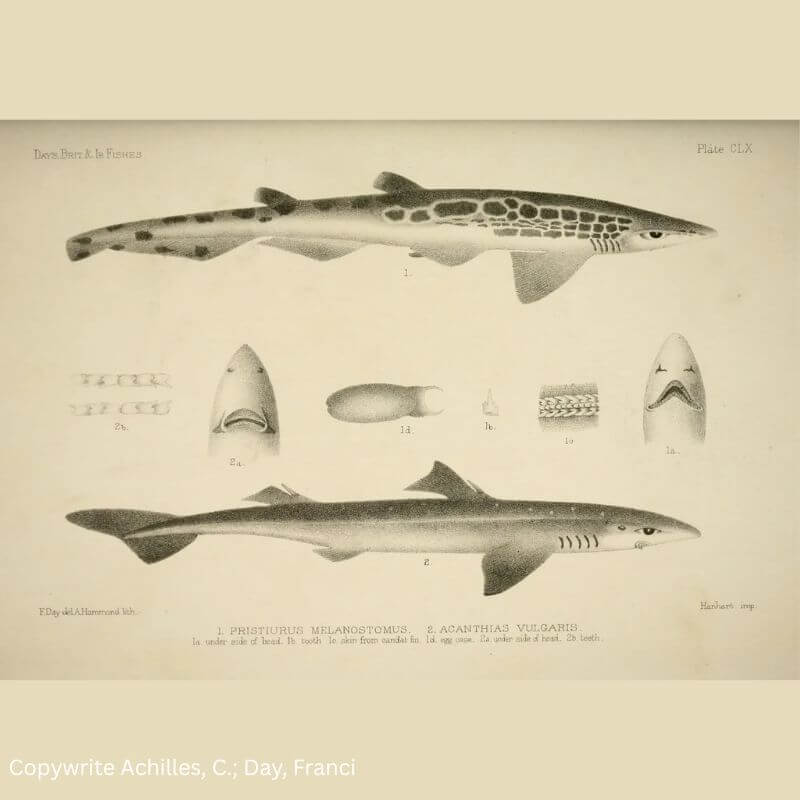
Some of the most significant features that allow for correct identification are:
• Black lining along the edges of the mouth.
• Long and thin in shape with a long, slender body.
• Grey-brown in colour with an overall grey-brown appearance.
• Saddle-shaped markings on either side of the body.
• Large, horizontally elongated, oval eyes with a distinct cat-like appearance.
• Long, pointed, and horizontally flattened snout.
• Long oval-shaped upper tail lobe.
What Does the Blackmouth Catshark Eat?
The Blackmouth Catshark is a predatory species that hunts opportunistically.
Common food items hunted by the Blackmouth Catshark include:
- Small schooling fish
- Lantern fish
- Squid
- Octopus
- Shrimp
- Deep water crabs
- Marine worms
- Small crustaceans.
Instead of hunting over large areas at high speeds for fast-moving prey, this species will cruise along the ocean floor, looking for opportunities to quickly capture prey. “This species has a high concentration of electroreceptors (ampullae of Lorenzini) and large, specialized eyes that are fine-tuned to detect bioluminescent light, allowing it to locate fast-moving or hidden prey effortlessly in the pitch black.
How Does the Blackmouth Catshark Hunt?
The hunt for prey in the deep ocean has required unique strategies.
Blackmouth Cat Sharks have a variety of hunting techniques using:
- Super sensitive olfactory (smell) sensors
- High levels of sensitivity to low light
- Ability to locate prey with electrolocation
- Energy saving by moving slowly & efficiently
- Blending into their dark background environment
Due to a lack of food availability at extreme depths, it is essential that Blackmouth Catsharks conserve as much energy as possible. These sharks do this by engaging in continuous but slow, highly efficient eel-like body undulations. This deliberate, slow-motion cruising increases hunting efficiency and minimizes the amount of energy they expend while navigating the continental slope.
How Does the Blackmouth Catshark Reproduce?
Many species of catsharks lay their eggs like the blackmouth catshark. The reproductive cycle of the Blackmouth Catshark is unique because females practice multiple oviparity, producing large batches of egg cases throughout the year:
The egg cases:
- Protect and nurture the growing embryo inside
- Deposited directly onto soft, muddy or sandy ocean floors without being attached to objects.
- Provide protection from predators for the juvenile shark
- Hatch at different times, in the spring, summer, fall and winter based on sea temperatures
Once they hatch, new baby sharks have no care from their parents.
What Threats Does the Blackmouth Catshark Face?
While the Blackmouth Catshark is not typically actively pursued for commercial or recreational purposes in many fisheries, it still faces other threats.
These major threats to this species are:
Deep Sea Fishing
Some forms of deep-sea fishing, such as bottom trawls, have been known to catch numerous cat sharks along with their intended target fish as bycatch.
Damage to Habitat
The heavy use of equipment for deep-sea fishing has also shown potential to disrupt or harm the sensitive habitats where they breed and reside.
Effects of Climate Change
Changes in ocean temperature and oxygen levels could affect prey availability for Blackmouth Catsharks and the suitability of their environment.
Marine Pollution
Increasingly, microplastic debris and chemical pollutants from marine pollution are reaching the deepest areas of our oceans.
Conservation Status of the Blackmouth Catshark
While current assessment data indicate that the Blackmouth Catshark (Galeus melastomus) is currently a lower threat to extinction compared to other shark species of the world, researchers will likely be continuing their study of this species’ population. While the Blackmouth Catshark itself reproduces quickly, it serves as a critical baseline indicator species for deep-sea health, helping scientists monitor the broader deep-sea ecosystem where most other sharks suffer from:
- Very slow growth rates and long maturation periods
- Low reproductive outputs and delayed sexual maturity
- Severe population declines from deep-sea commercial trawling
- Multi-generational recovery timelines (decades) when overfished
The continued research by these scientists will help inform fishery managers’ management decisions regarding potential conservation measures.
Frequently Asked Questions About This Catshark Species
Are blackmouth catsharks poisonous?
No. Blackmouth catsharks are neither poisonous nor venomous.
Can I keep a blackmouth catshark in a home aquarium?
Blackmouth catsharks are not suitable for a home aquarium because they require a specific environment with a very large body of water at great depth.
What depth do blackmouth catsharks live in?
Most blackmouth catsharks have been recorded living between 300 and 800 meters. However, some have been reported to range from 150 meters to 1400 meters.
Do blackmouth catsharks attack humans?
No. They inhabit waters so deep that no one can reach them when swimming or diving, thus posing no danger to anyone.
How did the blackmouth catshark get its name?
The blackmouth catshark got its name based on the distinctively dark colouration of its mouth.
Is the blackmouth catshark endangered?
Currently, no scientific classification ranks this fish among the most critically threatened shark species; however, all deep-sea sharks are susceptible to overfishing and should therefore be monitored.
Discover More Incredible Shark Species
Even though the Blackmouth Catshark has become one of the most well-known deep-sea cat sharks, there still remains much that is unknown. The researchers continue to study migration patterns, lifespan, breeding behaviour, and responses to changes in ocean conditions. Advances in Remotely Operated Vehicles (ROV’s) and Deep-Sea Cameras, as well as Underwater Mapping, have allowed scientists to observe these animals in their Natural Habitat more often than previously. Because of advancements in Technology, our knowledge of this incredible species will continually expand, helping conservationists protect deep-sea ecosystems for future generations.
The Blackmouth Catshark serves as an example of not all sharks being large ocean predators. Many species spend their entire lives hidden within the deep sea, quietly supporting healthy marine ecosystems. Through learning about lesser-known sharks such as the Blackmouth Catshark, we increase our appreciation for the incredible diversity of life beneath the waves and the importance of preserving oceans’ habitats.