

Dusky Shark: One of the Ocean’s Most Vulnerable Predators
The dusky shark (Carcharhinus obscurus) is a large and powerful requiem shark found in found in tropical and warm-temperate continental seas worldwide. Due to its ability to move with grace and agility and its status as one of the largest requiem sharks, this species is very important in maintaining healthy marine ecosystems. Although the dusky shark is known to be strong and able to adapt to many different environments, it is also listed as endangered because it grows slowly, matures later than most other fish, and produces few young.
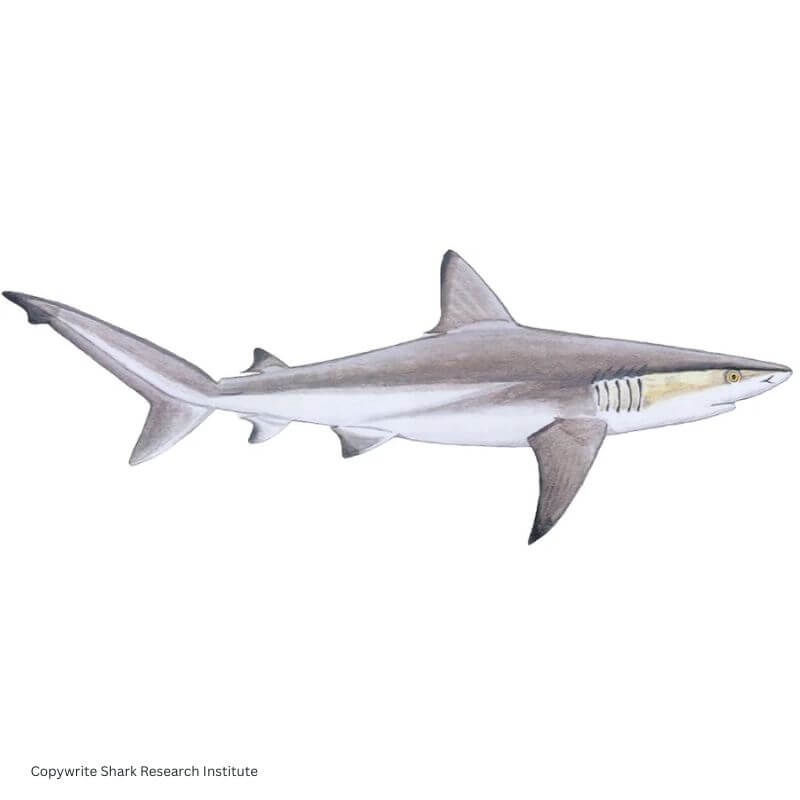
What Is a Dusky Shark?
How Can You Identify a Dusky Shark?
Correctly identifying a dusky shark is somewhat difficult, as many requiem shark species can look very much alike.
Some key characteristics that help identify a dusky shark include:
- Upper body colouration ranges from bronze to light brown or dark grey
- White on the lower side of the body
- Snout rounded and relatively long
- Pectorals, or shoulder fins, are quite large and arc-shaped
- The first dorsal fin: Positioned far back, originating over or slightly behind the free rear tips of the pectoral fins.
- Body slender to accommodate swimming over extended distances
- Juvenile trait: Young pups feature darker, more prominent shaded markings on their fin tips which gradually fade as they mature.
Where Do Dusky Sharks Live?
One of the most widely distributed of all requiem sharks, the dusky shark has been found in almost every ocean and some seas, including:
- Atlantic Ocean
- Indian Ocean
- Pacific Ocean
- Mediterranean Sea (periodically)
Dusky sharks favour the following areas:
- Continental shelf waters
- Reef systems far offshore
- Shallow coastal waters
- Regions with abrupt changes in depth (drop-offs)
Young dusky sharks typically live in safe, nursery-type areas of shallow-water bays and estuaries that pose less risk from larger predators during their juvenile development.
How Does a Dusky Shark Hunt?
The dusky shark has five highly developed senses which help it track down its prey. These include:
- A high degree of visual acuity (eyesight)
- Good hearing ability
- Highly sensitive olfactory ability (ability to smell)
- An ability to locate electric fields generated by prey
When hunting, dusky sharks will generally swim slowly over the coastal and shelf waters until they spot potential prey, at which point they will quickly accelerate towards the target. Unlike most other predator species, rather than lying in wait for unsuspecting prey, dusky sharks will chase their prey through open ocean using their incredible swimming abilities.
Diet
Apex predators like the dusky shark have diets that range from a very diverse array of prey species to very few prey species.
Species of prey for dusky sharks include:
- Tuna
- Mackerel
- Sardines
- Bonito
- Hake
- Squid
- Octopus
- Rays
- Small sharks
- Various crustaceans
Juvenile dusky sharks tend to eat smaller prey than adult dusky sharks. Their wide variety of foods is one reason they can use their many sensory organs to survive seasonal changes in food availability.
Dusky Shark Life Cycle and Reproduction
Sharks are viviparous. Sharks deliver their babies alive instead of laying eggs. The reproduction process consists of the following steps:
1. Internal Fertilisation:
This occurs when a sperm from the male fertilises an egg inside the female’s body.
2. Gestation Period:
A gestation (pregnancy) period lasts about 22–24 months. After this time period, the baby will be ready to emerge.
3. Live Birth in Shallow Nursery Areas:
Baby sharks, also known as pups, are born in shallow nursery areas with plenty of food.
4. Litter Size:
Each litter usually contains 3–16 pups.
5. Young Shark Growth and Development:
Baby sharks stay in coastal waters with shelter for several years before migrating to open-ocean waters.
6. Slow Reproductive Rate:
Dusky sharks have one very unique characteristic—they produce offspring at a slow rate. Female dusky sharks can only produce new offspring once every three years, which makes it difficult for populations to recover.
How Long Do Dusky Sharks Live?
Dusky sharks are among the few shark species that appear to live long lives.
It is estimated that dusky sharks are capable of living at least:
- More than 40 years
- Possibly as much as 50 years or longer
Also, compared to most sharks (and some fish), dusky sharks take an extremely long time to reach maturity.
The approximate age of maturation of dusky sharks includes:
- Males: approximately 20 years old
- Females: 21 years old or possibly older
Because dusky sharks do not reach maturity until such a relatively old age, it would not take much increase in fishing effort to significantly affect dusky shark population levels.
Are Dusky Sharks Dangerous to Humans?
Attacks by dusky sharks are very rare, and when a person encounters one in the water, it is almost always accidental. While dusky sharks can grow quite large and have very strong jaws that deliver crushing power, we still need to show respect because these animals tend to stay away from humans. Divers who swim near dusky sharks (usually at depths less than 30 feet) typically report seeing them as curious, calm, cautious, and slow-moving.
Why Are These Sharks Important to Marine Ecosystems?
Dusky sharks serve as a vital component to their ecosystem.
Their status as apex predators means that they function as a controlling agent for:
- Fish Populations
- Weak & Sick Animals
- Balanced Food Webs
- Healthy Marine Biodiversity
If the ecosystem is disrupted through the removal of apex predators (i.e., the dusky shark), it will affect numerous other species in the system.
Why Is the Dusky Shark Vulnerable?
Human activities have created various threats to dusky sharks.
Some of these threats include:
Commercial fishing
Dusky sharks are frequently caught in longline, gillnet, and trawl fisheries. The dusky shark has been targeted for:
- Meat
- Fins
- Liver oil
- Incidental catches
Dusky sharks are also incidentally caught when fishermen target tuna, swordfish, or other commercially harvested fish.
Slow Population Recovery
Compared to rapidly reproducing fish, dusky sharks:
- Reach maturity at an older age
- Have fewer pups than most fast-reproducing fish
- Reproduce less often than most fast-reproducing fish
Because of this, it is much harder to rebuild their population sizes.
Habitat degradation
Nursery habitats are becoming degraded along coastal areas due to:
- Pollution
- Coastal development
- Climate change
- Loss of estuaries
Final Thoughts on the Dusky Shark
The Dusky Shark is an incredibly impressive predator in the world’s oceans. In addition to being intelligent and adaptable, the dusky shark has many characteristics that place it at the top of the food chain, making it an ideal candidate for scientific studies. Unfortunately, as a result of having a long life cycle, this unique predator is extremely susceptible to both fishing pressure (from commercial and recreational fishermen) and habitat loss. Studying sharks such as the dusky shark provides insight into how crucial healthy shark populations are for maintaining a healthy ecosystem in our oceans. By supporting scientists conducting research on sharks, working towards sustainable and environmentally conscious fisheries management practices, and promoting marine conservation efforts, we can ensure that future generations have access to the same diverse array of wildlife found in our oceans today.