
5 Differences between Great White Sharks and Bronze Whaler Sharks

5 Differences between Great White- and Bronze Whaler Sharks Let’s see how they differ, and in which ways they perhaps are similar… The Great White shark (Carcharodon carcharias) and the Bronze Whaler shark (Carcharhinus brachyurus) are two distinct species of sharks with several differences: 1. Appearance: Great White sharks are larger and bulkier, reaching an average length of 15-20 feet and weighing up to 5,000 pounds. They have a distinct white belly and a grayish upper body. Bronze Whaler sharks, on the other hand, are smaller, averaging around 8-10 feet in length and weighing up to 600 pounds. They have a bronze or grayish-brown coloration. 2. Habitat: Great White sharks are found in coastal and offshore waters of temperate and subtropical regions worldwide. They are known for their preference for cooler waters. Bronze Whaler sharks, on the other hand, are primarily found in warmer coastal waters, including the Indian and Pacific Oceans. 3. Diet: Great White sharks are apex predators and feed on a variety of marine animals, including seals, sea lions, fish, and even other sharks. They are known for their powerful bite and ability to take down large prey. Bronze Whaler sharks, on the other hand, have a more varied diet that includes fish, squid, rays, and smaller sharks. 4. Behavior: Great White sharks are known for their predatory behavior and are often associated with attacks on humans, although such incidents are relatively rare. They are known for their ability to breach the water surface while hunting. Bronze Whaler sharks, on the other hand, are generally not considered a threat to humans and are known for their schooling behavior, often found in groups. 5. Conservation status: Great White sharks are listed as vulnerable by the International Union for Conservation of Nature (IUCN) due to overfishing, habitat degradation, and accidental capture in fishing gear. Bronze Whaler sharks, on the other hand, are listed as near threatened, primarily due to overfishing and habitat loss. It is important to note that both species play important roles in their respective ecosystems and contribute to the overall balance of marine life.
The Orca Situation
The Orca Situation Let’s talk about the ‘orca’ in the room… Orcas, also known as killer whales, are one of the most fascinating creatures in the ocean. They are the largest member of the dolphin family and are found in all of the world’s oceans. Orcas are known for their intelligence, social behavior, and hunting skills. In this blog post, we will explore some interesting facts about these magnificent creatures. Appearance Orcas are easily recognizable by their distinctive black and white markings. They have a sleek, streamlined body that can grow up to 30 feet long and weigh up to 10 tons. Orcas have a dorsal fin on their back that can grow up to six feet tall. The dorsal fin is unique to each individual orca and can be used to identify them. Diet Orcas are apex predators, which means they are at the top of the food chain. They are known for their hunting skills and can prey on a variety of animals, including fish, seals, sea lions, and even other whales. Orcas work together in groups called pods to hunt their prey. They use a variety of techniques, including beaching themselves to catch seals and creating waves to knock seals off ice floes. Behavior Orcas are highly social animals and live in pods that can range from a few individuals to over 100. They communicate with each other using a variety of vocalizations, including clicks, whistles, and pulsed calls. Orcas are also known for their playful behavior, and they have been observed playing with objects such as seaweed, sticks, and even boats. Conservation Orcas are considered a vulnerable species, and their populations are declining in some areas. The main threats to orcas include pollution, habitat loss, and overfishing. In addition, captive orcas have been the subject of controversy, with many people calling for an end to the practice of keeping them in captivity for entertainment purposes. Conclusion Orcas are truly remarkable creatures that have captured the imagination of people around the world. They are intelligent, social, and highly skilled hunters. However, their populations are under threat, and it is important that we take steps to protect them and their habitats. By learning more about these magnificent creatures, we can better understand their importance and work to ensure their survival for generations to come. It is of recent that Orcas have started visiting our shores and their numbers are increasing. They have been responsible for preying on our Great Whites which are also an endangered specie. As the Orcas food source is near depletion in our Antarctic waters they are venturing to other areas to hunt and prey.
Bronze Whaler Sharks
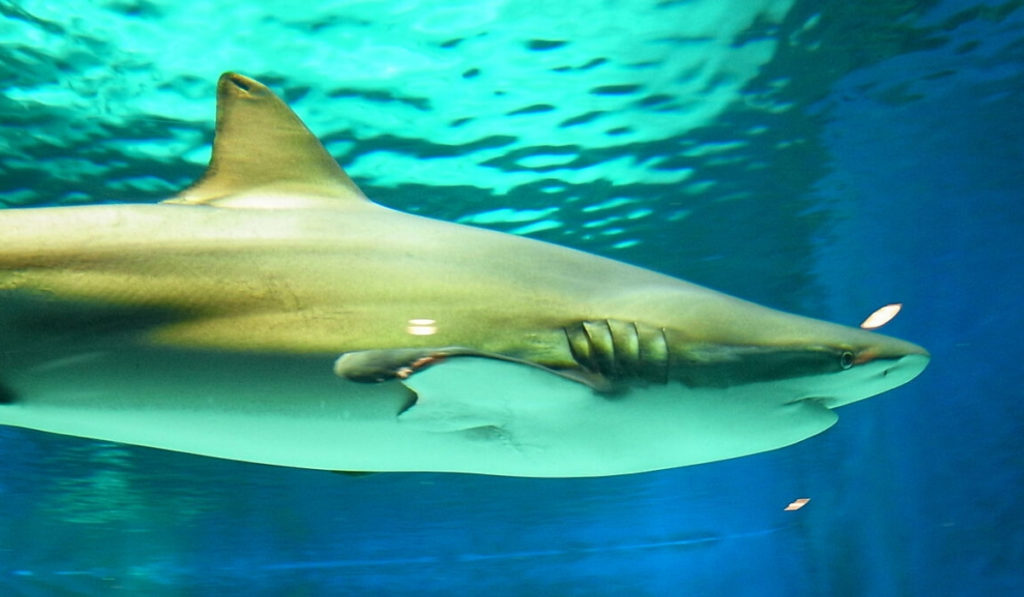
Bronze Whaler Sharks Some interesting things that make these ‘bronzies’ unique… This shark gets its name from its bronzy-grey to olive-green coloring. It is the only species of requiem shark in the genus Carcharhinus that lives in temperate rather than tropical waters. They occur throughout the world but the distribution is patchy, with what appear to be regionally isolated populations that have little exchange between them (Compagno et al. 2005). Order – Carcharhiniformes Family – Carcharhinidae Genus – Carcharhinus Species – brachyurus Common Names English language common names for this species include narrowtooth shark, bronze whaler, cocktail shark, cocktail whaler, and copper shark. Other common names include: bronzie (Afrikaans)koperhaai (Afrikaans, Dutch)squalo ramato (Italian)kuroherimejiro (Japanese)cacão (Portuguese)tubarão-cobre (Portuguese)tiburón cobrizo (Spanish)tollo mantequero (Spanish)karcharinos vrachyouros (Greek) Danger to Humans According to the International Shark Attack File, the bronze whaler shark has been implicated in fifteen attacks since 1962, one of which resulted in a fatality. It is considered potentially dangerous to humans (ISAF 2018). Conservation IUCN Red List Status: Near Threatened The bronze whaler was listed as “Near Threatened” on the IUCN Red List in 2003. This assessment is based on the fact that it does not appear especially abundant anywhere. Instead, it appears sparsely distributed across small regional isolated populations around the world. The bronze whaler is locally common in some parts of its range; There have been population declines in New Zealand that have been attributed to overfishing (Duffy and Gordon 2003). > Check the status of the bronze whaler shark at the IUCN website. The IUCN is a global union of states, governmental agencies, and non-governmental organizations in a partnership that assesses the conservation status of species. Geographical Distribution The bronze whaler shark has a worldwide distribution in warm temperate and subtropical waters in the Indo-Pacific, Atlantic, and Mediterranean (Compagno et al. 2005). Habitat The bronze whaler shark commonly occupies a variety of habitats from shallow bays and estuaries to inshore and continental shelf areas. It has been found from the surf line to depths of up to 328 feet (100 m), but is believed to range deeper (Duffy and Gordon 2003). Biology Distinctive FeaturesThe bronze whaler shark is a large classically shaped requiem with a pointed snout. It has characteristic narrowly triangular hook-shaped teeth. The upper teeth are sexually dimorphic, the males having proportionately longer and more hook shaped teeth than the females and juveniles. The eyes of this shark are circular and relatively large. Bronze whaler sharks have moderately large pectoral fins with narrowly rounded or pointed tips. The caudal fin has a bulge near the base of the front edge. This species lacks an interdorsal ridge (Compagno et al. 2005). The shark is sometimes confused with dusky shark (Carcharhinus obscurus), blacktip shark (Carcharhinus limbatus), sandbar shark (Carcharhinus plumbeus), and spinner shark (Carcharhinus brevipinna), it can be distinguished by its distinctive upper teeth as well as the lack of any pronounced body markings and lack of an inter-dorsal ridge (Compagno et al. 2005, Duffy and Gordon 2003). ColorationThe bronze whaler shark is bronzy grey to olive-grey in color on its dorsal surface and white on the ventral surface. This counter shading serves to camouflage the animal from predators or prey below. This species has dark markings on the edge of its fins and white or dusky tips. Bronze whaler sharks are often confused with blacktip sharks or spinner sharks because of their markings (Compagno et al. 2005). DentitionJuvenile bronze whaler sharks have teeth in the upper jaw that are finely serrated and have erect symmetrical cusps. Adult bronze whaler sharks on the other hand, have narrowly triangular finely serrated cusps in the center of the upper jaw, which become more oblique as they move out towards the corners of the mouth. The lower teeth are characterized by more oblique cusps and are finely serrated as well. Tooth counts range from 14 to 16 on either side of the upper jaw and 14 – 15 on either side if the lower jaw. Upper jaw teeth are sexually dimorphic in adults – see above Size, Age, and GrowthBronze whaler sharks grow to maximum size of around 295 cm, but may attain lengths of 350 cms in rare cases . Size at maturity for males is 206-235 cm and 227-244 cm for females. The age at maturity is estimated at 13-19 years for males and about 20 years for females. Bronze whaler sharks are about 60 cm in length at birth (Duffy and Gordon 2003). Food HabitsThe diet of the bronze whaler shark consists of a variety of cephalopods including squid and octopus as well as sardines, mullet, and flatfish. During the winter months, large numbers of bronze whaler sharks follow the sardine shoals as they move along the coast of southern Natal in the “sardine run”. Adult bronze whalers are known to feed on other elasmobranchs such as stingrays and other sharks (Compagno et al. 2005, Duffy and Gordon 2003). ReproductionThe bronze whaler is a placental vivipararous species, which means that its embryos are nourished via a placental connection to the mother and are born alive. Gestation is estimated to last 12 months and reproduction occurs biennially. According to the limited data available, pups are born from June to January and litters contain between 7 to 24 pups with an average of 15 and are approximately 60 cms TL at birth. The bronze whaler uses inshore bays as nursery areas (Duffy and Gordon 2003). PredatorsLarger sharks may prey on juvenile bronze whales ParasitesOtodistomum veliporum is a type of fluke that has been found in the stomach and spiral valve of bronze whaler sharks in Brazil. Cathetocephalus australis is a tapeworm that can also be found in bronze whaler sharks from the southwestern Atlantic Ocean (Schmidt and Beveridge 1990). Taxonomy Günther first described Carcharhinus brachyurus in 1870. Synonyms include Carcharias lamiella Jordan and Gilbert 1882, Eulamia ahenea Stead 1938, Carcharhinus improvisus Smith 1952, Carcharhinus rochensis Abella 1972, Carcharhinus remotoides Deng, Xiong and Zhan 1981, and Carcharhinus acarenatus Morenos and Hoyos 1983. The genus name Carcharhinus is
Biology, habitat and distribution of Great White Sharks
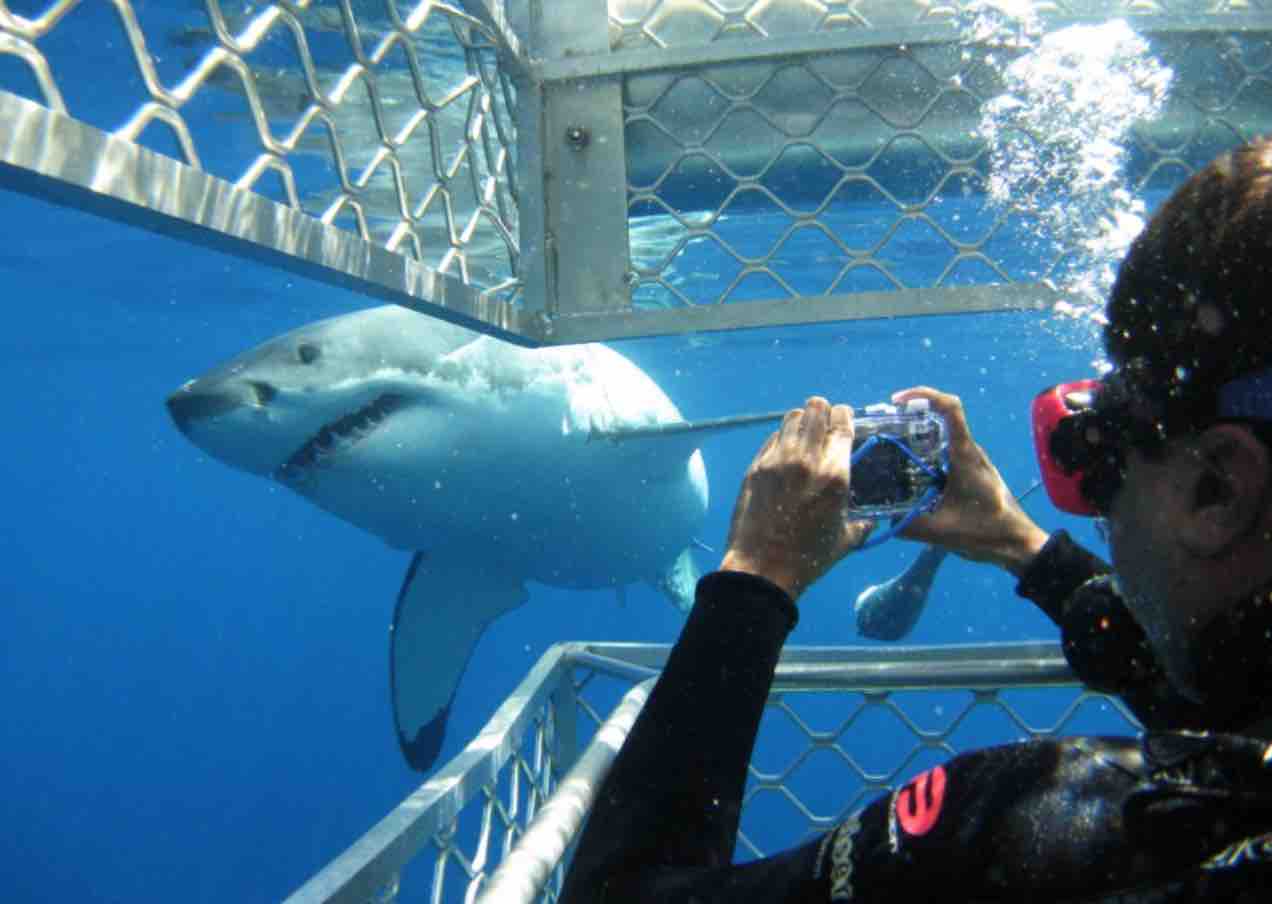
Biology, habitat and distribution of Great White Sharks Today we review the biology of the great white shark, including various theories on its evolution and descent as a species, physiological aspects, as well as some unique characteristics of Great Whites… Portrait of a perfect apex predator Apex predators (also known as alpha or super predators) are animals that have no predators of their own, residing at the top of their respective food chain. As such, apex predators, have a crucial role in maintaining the health of their ecosystems. Sharks have roamed our planet’s oceans for morethan 400 million years, predating the dinosaurs by some 200 million years. Although they existed at the same time as the dinosaurs, sharks survived the mass extinctions our planet experienced. Considering that the earliest hominids date back only a few million years, sharks have been around for a very long time. This ancient lineage does not, however, equate them to a primitive form of life. Sharks have constantly adapted and perfected their shapes and sensory capabilities over the millennia, and today present one of the most perfectly adapted creatures on our planet. The Great White is a highly evolved animal, forming the pinnacle of marine predation and is one of the true apex predators of our oceans. Its long maturity cycle, its incredible array of senses, a blood circulation system able to retain heat to maximise its muscle energy, as well as the ability to selectively target its preferred prey, attest to an evolutionary marvel. Biology Evolution and classification Shark are an ancient group of animals, and have remained virtually unchanged for the last 200 million years. The basic form of a shark consist of two dorsel fins, flexible jaws able to thrust forward during feeding and a powerful tail for propulsion. The retention of similat body shapes from prehistoric to modern sharks suggests that their morphological and anatomical characteristics make them one of the most successful species on this planet, perfectly adapted to their environment and therefor highly evolved. Sharks are classified into eight primary orders: The Great White shark was first described by Carolus Linnaeus (a Swedish botanist who established a general system for naming and classifying all living things) in 1758. He named the species Squalus Carcharias. Ichthyologist Andrew Smith later renamed the species Carcharodon Carharias, which is derived from the Greek karcharos (meaning ‘sharp’ or ‘sharpen’) and ‘odous‘, which refers to teeth. The species name Carcharias, also from the Greek, means ‘point’; in Australia the Great White is commonly known as the ‘white pointer’. Other names given to the Great White are White shark, blue pointer, white death, witdoodshaai (Afrikaans) and Weisshai (German). The Great White is a member of the the order Lamniformes, which contains fifteen different species, of which the Lamnidae or Mackelel Shark sub-order includes five species: Great White, Longfin Mako, Shortfin Mako, Porbeagle Shark and the Mackerel Shark. The members of the Lomnidae family are typically torpedo-shaped. Interestingly, they don’t have nictriting membranes – found in many other shark species – which protect the eye at the point of contact or during predation. Instead, they are able to roll their eyes completely back into their sockets, thereby offering a higher degree of protection than a nictitating membrane would. The Lamnidae typically also have jaws that extend well behind the eye, strong caudel keels and possess five relatively large gill slits for maximum oxygen absorption. Theories on how Great White Sharks evolved There are three conflicting theories on how Great White sharks evolved. One theory traces the Great White back to the massive and now extinct Megalodon Shark; another to the predecessor a Mako shark lookalike, Isurus hastiles; and a third suggests that the Great White evolved as a distinct species in parallel with the Magalodon and Isurus hastiles. In the case of a Megalodon descent The Great White – Megalodon descent theory is probably the best known. The Megalodon was the largest predatory shark that ever lived on earth. It was armed with fomidable teeth and jaws that could exceed 2m (6.5ft) in diameter. Some fossilised teeth ate larger than 20cm (8 inches) in length, which would have enabled Megalodon to hunt any animal in its aquatic realm. Based on the fact that both Megalodon and the Great White have serrated teeth, some scientists have placed the two species into the same genus, namely, Carcharodon. In the case of an Isurus Descent Other scientists believe that the Megalodon was an evolutionary dead-end and that the Great White is a direct descendant of the long-extinct Isurus hastalis, a species that closely resembles the Mako shark. Again, the basis for this classification of origin lies in the shape of the teeth, which also resembles Isurus hastalis, but with weaker serrations, indicating a possible transitional form, making it possible that the Great White was a descendent of the Isurus hastalis lineage before it developed more pronounced tooth serration. In the case for an independent yet parallel development Some scientists believe that the Great Whitedeveloped independently from, or at least in parallel to, the Megalodon and Isurus hastalis. Again, the tooth structure seems to suggest that the Great White’s ancestors may have developed independently, and that the strong serrations of the Great White shark are unique and seperate it from other lines of descent. It is also possible that the Great White in its current form could survive betterdue to its ‘smaller’ size than the Megalodon and the Isurus hastalis, especially when large prey became scarcer during the period of extinction of the dinosaurs. Did the Megalodon and Isurus hastalis starve to death, allowing the Great White to flourish on smaller prey? Considering that to date more than 1200 species of sharks, rays and chimeras have been recorded inhabiting our oceans, a seperate and independent lineage may be a worthy consideration given this diverse group of animals. Whichever lineage the Great White descended from, one thing is certain; it has evolved into a truly remarkable macro predator that today remains at the apex of its evolutionary form. Great Whites can
5 Amazing Facts about Great White Sharks
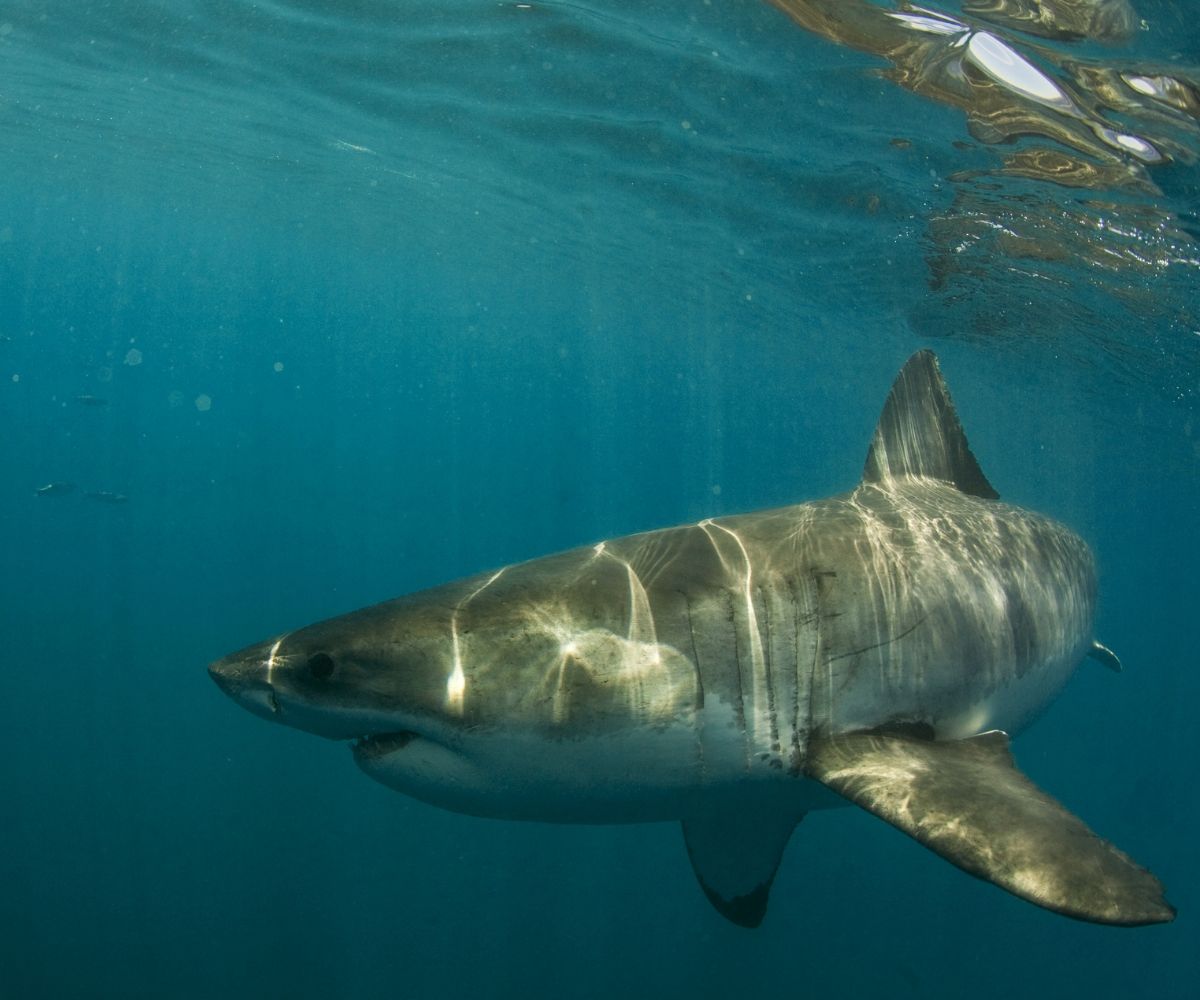
5 amazing facts about great white sharks The first thing that comes into people’s minds when they think about great white sharks is that they are relentless killers, but not many people realise that there are still many mysteries about the Great White Shark that we still don’t know. Here are some fun facts about great white sharks that you probably don’t know about: The Great White Shark cannot be kept in captivity: For land animals, all you need to do is recreate their world on land in a closed off environment, which is easy to do. For animals in the ocean, it’s not this simple. For ocean creatures, such as dolphins and other fish, scientists have been able to hit the nail on the head, but its proven to be quite unsuccessful for the Great White Shark. The shark is known to ‘refuse’ to live under captivity – they either starve themselves or they slam their heads against the walls, and many aquariums have been forced to release the creature back into the wild for their own safety. Humans have never experienced Great Whites mating: Great White Sharks are near impossible to follow around because they appear and disappear at their own will in deep waters. Observing Great White Shark mating is more difficult than other species. Great White Sharks are quite rare and it is dangerous to be in the water with them outside of a cage. They are often in places where the water is cold and murky making it hard to shoot any footage of them as well. Great White Sharks have a secret party spot: Great white sharks tagged in North America have been tracked to travel to waters around Hawaii and take a yearly respite in a mysteriously alluring mid-ocean spot that researchers are calling the “white shark café”. Scientists still haven’t been able to figure out what goes on in these waters but it is suspected that this is where mating takes place or where female sharks travel to give birth. They have a sixth sense: Great whites have a network of special cells that can detect electricity, called electroreceptors, in their heads. They use them for hunting and navigation. This sense is so developed that sharks can find fish hiding under sand by honing in on the weak electrical signals emitted by their twitching muscles. They don’t like conflict: Great white sharks are actually conflict-avoidant — at least with one another. When there isn’t enough food to go around, sharks swim past each other, slapping the surface of the water with their tails. Whoever slaps the water the most and hardest gets the meal. Book your shark cage diving trip with us to get the ultimate experience you will never forget!
Are Great White Sharks descendants of the Megalodon Shark?
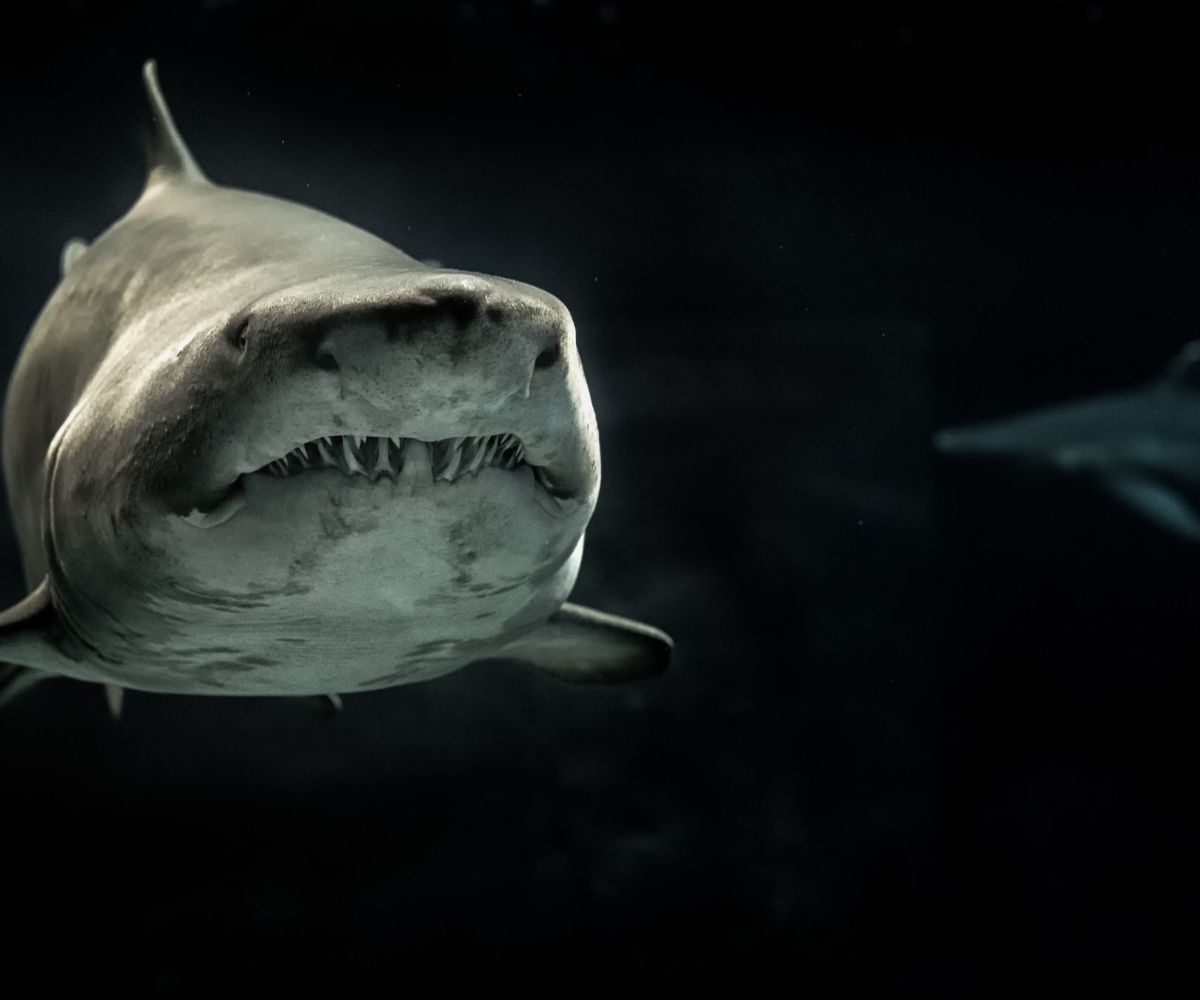
Dinosaurs have been the most widely studied prehistoric fascination of our time. Sometimes it’s crazy to think that these giant creatures once roamed and ruled earth when we compare their fossils with the size of ordinary human beings. Let’s look at the ocean though, what giant creatures ruled this part of the earth during the Mesozoic Era?… Ever heard of the Megalodon Shark? Millions of years ago the oceans were ruled by a bus-sized, whale-eating shark with teeth as big as your hand called the Megalodon Shark. It’s said to have been able to grow up to 20 meters in length, almost three times the length of todays’ Great White Shark. When the fossil remains of this shark were first discovered back in the 1800s it was categorised in the genus Carcharodon, the same genus as the Great White Shark. Both these species have similar big serrated teeth and they are both the apex predators of their time, hence why they were categorised in the same genus. Back then, our understanding of shark taxonomy was pretty primitive compared to what it is now, however shark scientists have begun to question whether these two sharks really are related. The main reason why great white sharks are said to not have evolved from the Megalodon is the structure and growth of their teeth. The Great White Shark is said to show more similarities in tooth structure and growth to the extinct Broad-Toothed Mako shark than to the Megalodon. The only similarity that ties Great White Sharks and the Megalodon together is the serration on their teeth. Since this discovery, the genus of the Megalodon shark has been changed to Carcharocles which includes a range of other extinct sharks. There is however a conspiracy theory that the Megalodon shark is in fact not extinct. The Discovery Channel has made many documentaries on why these creatures still exist. Check out this short clip on some satellite footage that could possible portray the existence of this megashark: http://www.discovery.com/tv-shows/shark-week/videos/a-satellite-photo-of-megalodon/