

Caribbean Reef Shark: Powerful Reef Predator
The Caribbean Reef Shark is a recognisable type of shark that is commonly found in the tropical regions of the Western Atlantic Ocean, as well as the Caribbean Sea. These sharks have evolved into strong and very specialized predators living amongst the coral reefs of their native environment and play a vital role in keeping marine ecosystems balanced. Many people are misinformed about how friendly these sharks tend to be. In reality, there tends to be considerable curiosity on the part of the Caribbean Reef Shark when interacting with humans, but not aggression.
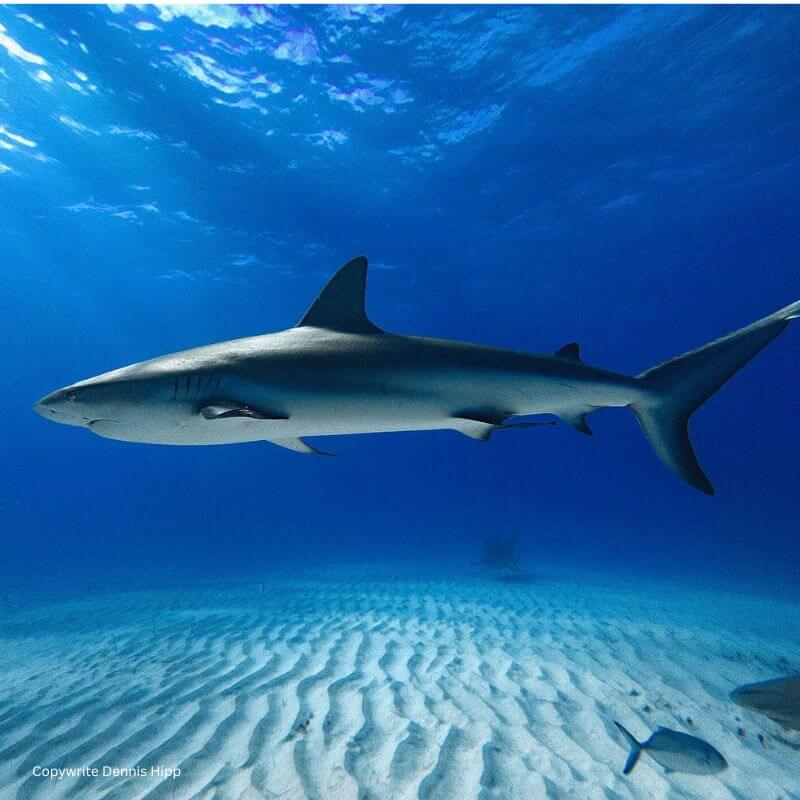
What Is a Caribbean Reef Shark?
The Caribbean Reef Shark (Carcharhinus Perezi) is a mid-size to large requiem-type shark and belongs to the family Carcharhinidae. In addition to being one of the most abundant of all the reef sharks that can be located throughout the Caribbean and the Western Atlantic, this species has also become well known for its long, slender body and wide, blunt nose, which is typically covered in an attractive shade of grey or bronze with light, pale white colouration underneath. Another attribute of this species is the absence of distinct black markings on its fins. A typical day for the Caribbean Reef Shark includes roaming coral reefs, areas where the reef drops off into deeper water, and open water, looking for food.
Where Do Caribbean Reef Sharks Live?
Why Do Caribbean Reef Sharks Prefer Coral Reefs?
Coral reefs provide most of what these sharks require: abundant food sources, shelter (including for juvenile sharks), clear water for hunting, resting places on reef ledges, and safe breeding sites. These marine ecosystems are highly biodiverse, making them ideal hunting grounds for this species.
What Does a Caribbean Reef Shark Look Like?
Caribbean Reef Sharks are similar in appearance to other sharks; however, they possess a well-developed, muscular body suited to an energy-efficient swimming style.
They can be identified by the following features:
- Grey to Bronze top side colouration
- White underbelly
- Wide, rounded snout
- A long, wide-based, high first dorsal fin
- Large Pectoral Fin
- Very Large Dark Eyes
- No black tip on either dorsal or caudal fin
Typically, they grow to 2–2.5 m in length; however, some specimens have been recorded reaching 3 m.
How Fast Can a Caribbean Reef Shark Swim?
Like other reef sharks, Caribbean reef sharks can swim at high speeds for short periods and over long distances with minimal energy expenditure, making them very powerful swimmers.
Caribbean reef sharks are able to achieve these speeds through their:
- Ability to rapidly accelerate
- Ability to make tight turns in narrow areas, such as coral formations
- Speed and power when making quick attacks on schools of fish
- Ability to cruise large distances with little energy expenditure
Because of this capability, combined with their slender bodies, they can continually patrol their reefs.
What Do Caribbean Reef Sharks Eat?
The Caribbean Reef Shark feeds on a wide variety of foods (it’s an opportunistic carnivorous predator).
Its diet consists mostly of the following foods:
- Reef fish
- Groupers
- Snappers
- Barracudas
- Rays
- Squid
- Octopuses
- Lobsters
- Crustaceans
Smaller fish and crustaceans are the primary food sources for young sharks; as they grow, they typically switch to larger prey.
How Do Caribbean Reef Sharks Hunt?
To hunt its prey, the Caribbean Reef Shark utilises several very advanced senses.
It uses:
- Excellent vision
- Acute hearing
- A highly sensitive olfactory system (smell)
- Detection of the small electrical impulses generated by its prey
Predatory activity for this species is primarily conducted during the following time periods:
- Dawn
- Twilight
- Night
Behaviour
Caribbean reef sharks are often characterised as confident and inquisitive animals.
Some typical behaviours exhibited by Caribbean reef sharks include:
- Cruising slowly through reefs
- Exploring new/unknown objects
- Swimming on their own or in pairs/small groups
- Tracking/following large groups of schooling fish (usually sardines)
- Exhibiting high site fidelity to optimal feeding areas without defending an exclusive territory.
Sharks are often seen by divers swimming calmly about an area of the reef system, but do not display aggressive behaviour when interacting with divers.
Are Caribbean Reef Sharks Dangerous to Humans?
This is one of the most asked questions. Although Caribbean reef sharks are large, they are not considered highly dangerous to humans. These sharks can be very curious and will investigate divers, particularly if food is available.
Most interactions with these creatures are non-violent.
As with all wildlife, however:
- Do not touch a shark!
- Do not feed sharks.
- Be cautious of your movements at all times.
- Give them their personal space.
- Follow all applicable safety regulations provided by your destination.
According to the International Shark Attack File, attacks caused by Caribbean reef sharks are quite rare relative to the number of individuals who enter tropical waters each year.
How Do Caribbean Reef Sharks Reproduce?
As with most requiem sharks, Caribbean Reef Sharks reproduce by giving birth to live young. Viviparity is the name of this mode of reproduction.
There are four parts in the reproductive process for all sharks:
- Fertilisation internally (the male releases his sperm into the female’s oviducts).
- A gestation period that can be approximately one year.
- Live Birth
- Litter size is generally 4–6 pups.
Unlike many other fish, a shark pup receives nutrients through a placental-like structure.
How Long Do Caribbean Reef Sharks Live?
According to scientists, Caribbean reef sharks have an estimated life expectancy of 20–25 years; however, if conditions are ideal, some may outlive this range. Because they grow more slowly than other species and reproduce at a lower rate, their populations are much harder to recover from declines.
What Role Do Caribbean Reef Sharks Play in the Ecosystem?
In addition to serving as apex predators in their ecosystem, Caribbean reef sharks help maintain healthy reef systems through various roles.
These include:
- Regulating fish populations
- Preventing the overpopulation of prey species
- Supporting biodiversity
- Maintaining balance within food webs
- Helping to stabilise reef ecosystems
Eliminating apex predators from a reef ecosystem can lead to an imbalance, ultimately affecting all aspects of the reef.
Threats Facing Caribbean Reef Sharks
While reef sharks are found throughout much of the Caribbean, they appear to be declining in several locations.
The major threats include:
Over-fishing
Commercial and recreational fisheries harvest large numbers of sharks each year.
By-catch
Large numbers of sharks are incidentally caught in commercial fisheries targeting other species for food or sport.
Loss of Habitat
Habitat degradation from the loss of coral reefs affects both where sharks feed and where they give birth.
Climate Change
Warming of the ocean waters contributes to coral bleaching, which leads to an overall decline in the health of the reef ecosystem.
Pollution
All of these factors negatively affect both sharks and their prey: plastic waste, chemicals from land-use runoff, and other pollutants.
Learn More About This Reef Shark Species
Caribbean Reef Sharks play an essential role as top predators in maintaining the balance of marine ecosystems within coral reefs. As such, these sharks are necessary to keep fish populations in check and to maintain overall ecosystem health. Because many people hold misconceptions about these animals, it is imperative that we continue to provide them with some level of protection through conservation practices, proper regulation of commercial fisheries, and the preservation of habitats where Caribbean Reef Sharks exist.