

Brown Shyshark: South Africa’s Shy Little Shark
The Brown Shyshark is one of South Africa’s least known yet perhaps most interesting shark species. While it may be overshadowed by many of the larger predatory fish species, this relatively small, benthic shark spends much of its time moving through rock reef and kelp forest habitats along South Africa’s coastlines. One reason so many people are fascinated by this shark is its shy nature. It also has what some consider to be an impressive defence mechanism. As such, this shyshark species has attracted the attention of marine biologists, underwater photographers and even shark fans. Although not as large or as powerful as many other sharks, the Brown Shyshark appears to play an important role in maintaining the health of coastal ecosystems.
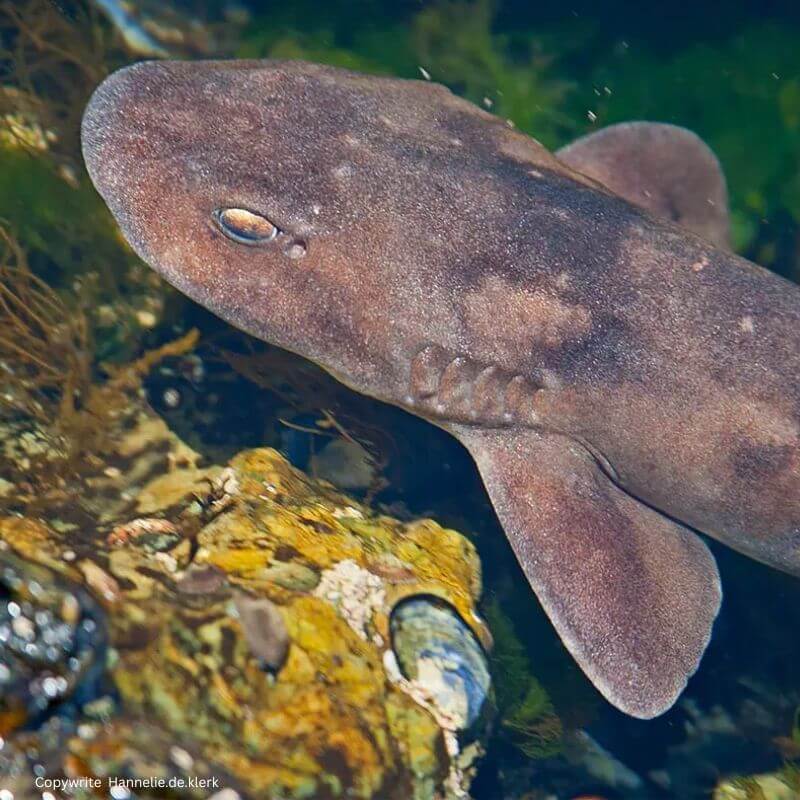
What Is a Brown Shyshark?
The Brown Shyshark (Haploblepharus fuscus) is a very small type of Catshark; the species belongs to the family Scyliorhinidae. Brown Shysharks are endemic to South Africa, meaning they have never been found anywhere else on Earth. Pelagic sharks swim through the water at high speeds for long distances, but as opposed to this type of swimming, brown shysharks live almost exclusively near the ocean floor. They choose to live near sheltered rocky reefs, kelp forests, or shallow coastal waters so they can hide among seaweed and boulders. Because of their docile nature and unusual appearance, the Brown Shyshark is one of South Africa’s most distinct coastal sharks.
Brown Shyshark Identification: How to Recognise This Small Shark
Although often mistaken for other shyshark species, the Brown Shyshark is a unique species that can be identified by its physical features.
Physical Characteristics:
- Max length is about 70cm.
- Flexible and slender bodies.
- Widely spread flat heads.
- They have large oval eyes, which are well-suited to low-light conditions.
- Their colouration can range from light brown to medium brown.
- Unlike other shysharks, they have a mostly uniform, plain color that lacks bold, distinct saddle bands.
- The belly side of these sharks generally appears pale compared to the upper side.
- They have rounded fins.
Brown Shyshark habitat along the South African coast
This shyshark is exclusive to the south coast of South Africa.
They prefer the following types of habitat:
- Rocky reefs
- Kelp Forests
- Shallower Coastal Waters (typically <35 m)
- Tide Pools
- Between rocky reefs and sandy areas
Most Brown Shysharks live in shallow (<35 m) depths, and most can be observed at much shallower areas. Because their range is so small, they are considered very important for conservation.
Why Is the Brown Shyshark Called a “Shy” Shark?
This shyshark species gets its name because it is shy (timid) compared to other sharks. Unlike many sharks that will flee from a threat over large areas and distances, typically the Brown Shyshark stays very close to some form of shelter or backs away slowly. The best-known defensive behaviour in shysharks is curling up tightly in a ring.
When the Brown Shyshark feels it is being threatened by a predator, it will do the following:
- It bends its body around into a circle
- With its tail, it covers its eyes
- It protects its vulnerable head.
- It makes it much harder for a predator to swallow by significantly increasing its width.
This defensive posturing has been one of the main ways to identify shysharks as a group.
Diet
During the daytime (daylight), Brown Shysharks normally hide under large rocks or in kelp forests, which are underwater seaweed beds. At dusk, when the sun goes down, they hunt at night.
Their normal foods include:
- Crustaceans
- Worms
- Squid
- Octopuses
- Bony Fish
- Shrimp
- Crabs
How Does the Brown Shyshark Hunt?
Like other bottom dwellers, the Brown Shyshark uses stealth when hunting. The way it hunts is by:
- Slowly moving along the ocean floor
- Looking in cracks and crevices for prey
- Detecting the electric impulses that are given off by its prey
Once it has detected its prey’s location, it will strike quickly. They have an incredible ability to camouflage themselves as they approach their prey.
Brown Shyshark Reproduction
Reproduction for the Brown Shyshark is done through reproduction via egg-laying (as opposed to viviparity). When reproducing, the female lays her eggs into egg cases that contain a long tendril, which can attach to either rocks or pieces of seaweed.
Inside the egg cases are contained:
- A safe development for the developing embryos
- The embryos are nourished with a yolk sac until they hatch
- Several months pass before the embryos develop and hatch fully formed young
Once they hatch, there is no parental care provided for the young. They immediately begin eating small fish and invertebrates.
How Big Does This Shyshark Get?
The Brown Shyshark is compared to other well-known shark species and is generally much smaller overall.
- Length (average): Approximately 50-60 cm
- Recorded maximum length: Approximately 70 cm
The small size of the Brown Shyshark allows it to fit into very narrow openings in rocks, providing protection from larger predators that might otherwise follow.
Is the Brown Shyshark Dangerous to Humans?
No. There have been NO documented cases of the Brown Shyshark causing harm to humans.
It possesses:
- Small teeth
- Calm temperament
- Very little curiosity towards humans
- Zero recorded instances of aggressive behaviour toward humans
If a diver or snorkeler were to handle this species of fish, they would likely receive a small defensive “bite”. However, all reported bites by a Brown Shyshark have been extremely minor and pose no safety risk.
Adaptations for Survival
This shyshark has some extraordinary features that enable it to thrive in its environment.
Camouflage
It is brown in colour, which makes it nearly invisible among:
- Seaweed
- Kelp
- Rock formations
- Sand-covered reefs
Only a handful of shark species exhibit this type of defence mechanism. When curled up into a circle, the Brown Shyshark shields its most vulnerable organs from potential predators.. In addition, curling into a circle shields the head from large predators.
Conservation Status
Although this shyshark does not rank among the world’s most threatened shark species, its limited geographic range may make conservation a priority.
The potential threats to this shyshark:
- Coastal development
- Habitat loss/deterioration
- Pollution
- Climate change
- Bycatch in fishing nets/gear
Conservation efforts to protect the Brown Shyshark will rely heavily on maintaining coastal marine habitats to ensure the species’ continued existence. Marine protected areas (MPAs) will continue to provide healthy reef systems that support reproduction and life-cycle processes for the Brown Shyshark.
Brown Shyshark vs Other South African Shysharks
South Africa has a number of shark species. The shysharks are similar but have subtle differences that distinguish them.
Identified by the other shysharks as follows:
- Distinctive brown color
- Dark saddle-shaped markings.
- Distribution
- Small difference in the proportions of their bodies.
The shysharks also occupy separate ecosystems.
Learn More About South Africa’s Incredible Sharks
The incredible shyshark species demonstrates how smaller sharks are just as interesting as larger ones. It also shows how a small coastal shark can be an example of some of the different ways in which the marine environment of South Africa has many different types of animals. While it may seem easy to appreciate big sharks, learning about smaller species such as the Brown Shyshark helps you appreciate how much there is underwater at your feet.